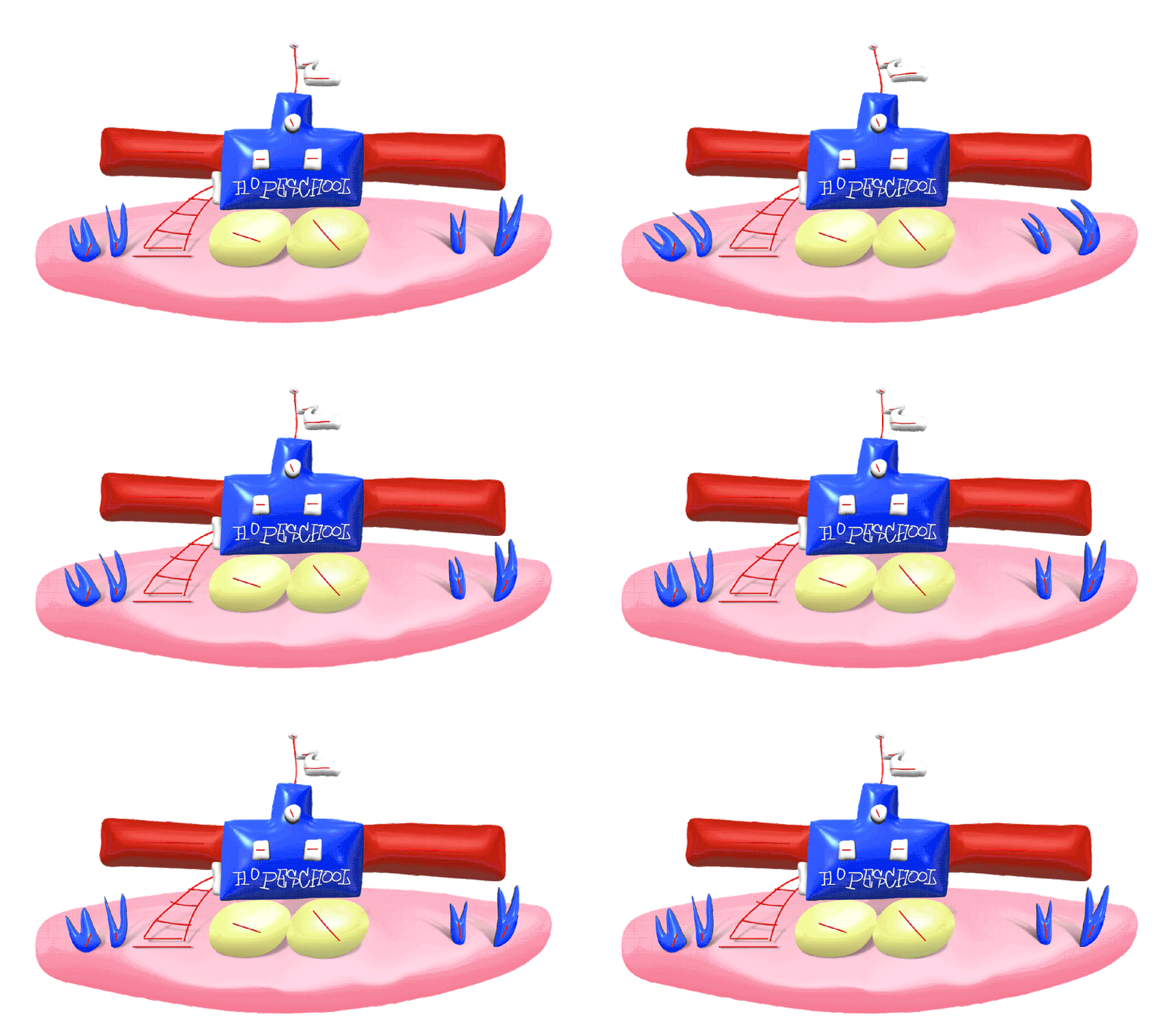
大理 Dalifornia 2023

During my travels in China this summer, I visited Dali, a city in China’s southwestern Yunnan province, and immediately fell in love with it. I was initially curious about Dali because many Chinese digital nomads, tech entrepreneurs, and bloggers I follow moved there, after spending years in urban cities like Shanghai.

Dali has an interesting combination of grand, imperial buddhist temples in the mountains, modern night life and live houses, as well as rolling green hills of peaceful paddy field in the countryside. Culturally, it felt quite different compared to the rest of China, since it’s the capital of Bai culture and architecture and there are influences from Laos, Vietnam, and Burma as these countries border the province to the south and west. Its relaxed, laid-back vibe with beautiful landscape, a burgeoning tech community, and the mild climate inspired the “Dalifornia” nickname among locals.

傍晚的光影打在山谷西南的高山草甸上

01 喜洲稻田

六月在云南大理休假,一方面是因为太喜欢《去有风的地方》(笑),另一方面其实好奇为什么很多国内的数字游民、科技从业者、和很酷的年轻人都搬去了大理。回国前,碰巧好友 Tina 推荐了大理喜洲,也正好想和家人一起去一个清净的地方好好休息,就决定去大理转转。

绿油油的喜洲稻田,六月水稻已经收割完了

这次旅行的亮点之一是住在喜林苑(The Linden Centre),一家由古宅修复而建的酒店。这个品牌的好玩之处在于它以酒店为起点,融合了民宿、文物修复、乡村文化和教育基地的角色。喜林苑的创始人林登1983年从芝加哥来中国,最初在北京学中文,后来辗转选择在大理定居,2008年在大理喜洲开始运营喜林苑。这次在大理体验了喜林苑的两家分店,分别是位于喜洲古镇的喜林苑 · 杨品相宅,以及位于石宝山下的喜林苑 · 沙溪夯土酒店。

喜林苑 · 杨品相宅是清末至民国初年很有影响力的喜洲商帮之一杨品相的旧宅,杨氏当时主营黄金、外币和棉纱。林登修复和设计喜林苑的过程很像设计研究中常用的「参与式设计」(Participatory Design),强调用户(即喜洲的当地居民)也沉浸式地参与到设计过程中。把设计权交给用户,借此激发不同视角和出发点的发散性创意,并从中提炼出核心需求和意想不到的解决方案。根据《寻乡中国》里的描述,林登当时邀请整个喜洲古镇的居民一起参与改建,以白族的传统手法,细细修缮打理这座老宅。以喜林苑为起点,希望能让世界各地的旅行者深入了解、体验并保护当地的人文历史。

照壁上的「清白传家」可知院落主人为杨氏

白色照壁除了阻隔空间外,反射光也可增加室内的采光

门前的石雕

照壁下的佛像

02 茶马古道上的沙溪古镇

临行前还犹豫是否值得开车两个多小时去大理北面的沙溪古镇,但后来很庆幸去了沙溪,也是这次旅行最喜欢的小镇。当地的建筑和社区保护得较好,目前还没有被过度开发和商业化。沙溪的发展模式确实和《有风》里描述得很像,不少当地的手工艺人擅长做木雕,镇子里也能看到很多木雕坊。沙溪还引进了先锋沙溪白族书局,以更好地保存本土作家的作品和系统整理白族历史、文化、民俗风情相关的书籍。慢慢地建造的文化社区,也带动旅游业的发展。

沙溪的建筑大多是黄色土培外墙
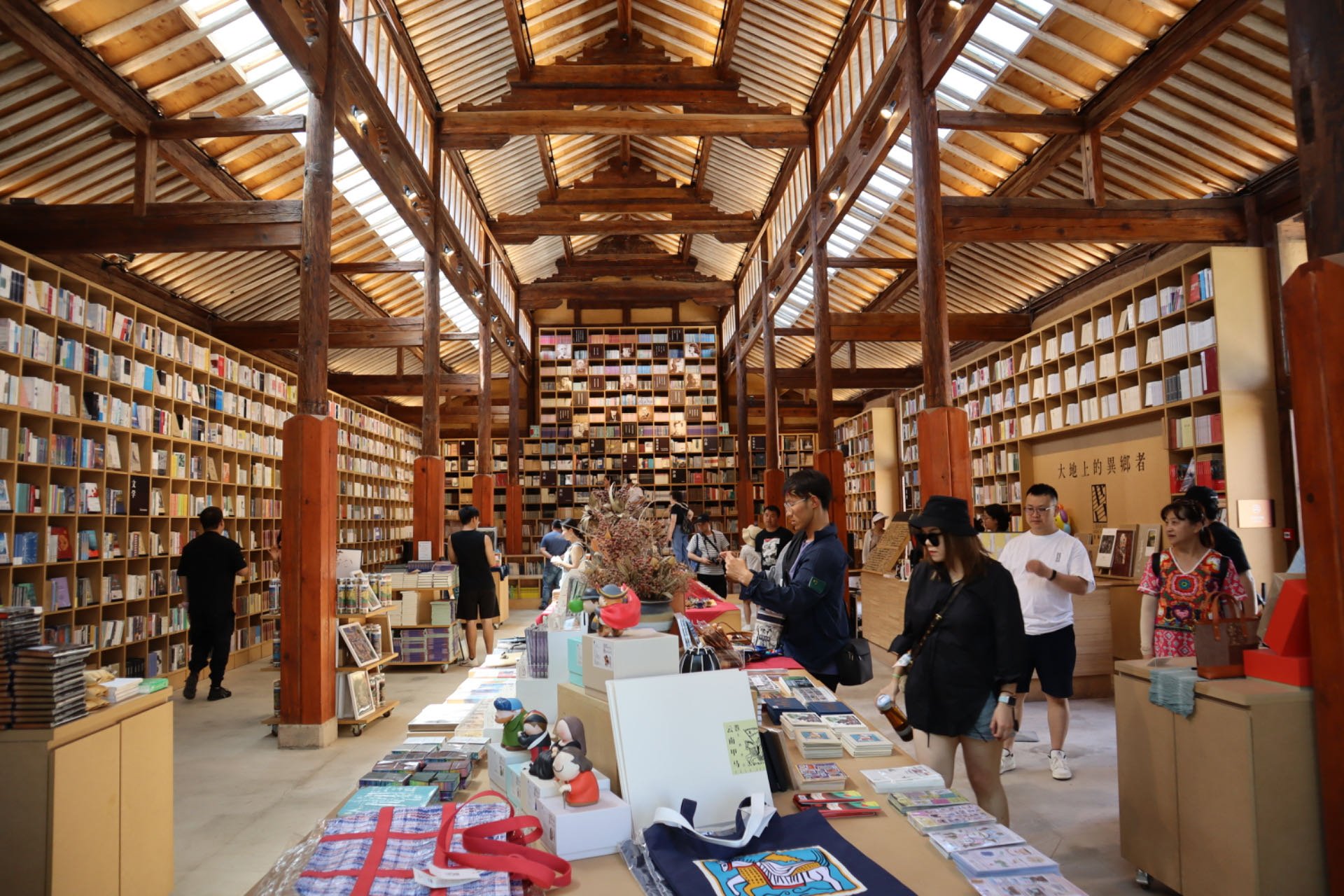
先锋沙溪白族书局

沙溪卓别林给妹妹画速写画像
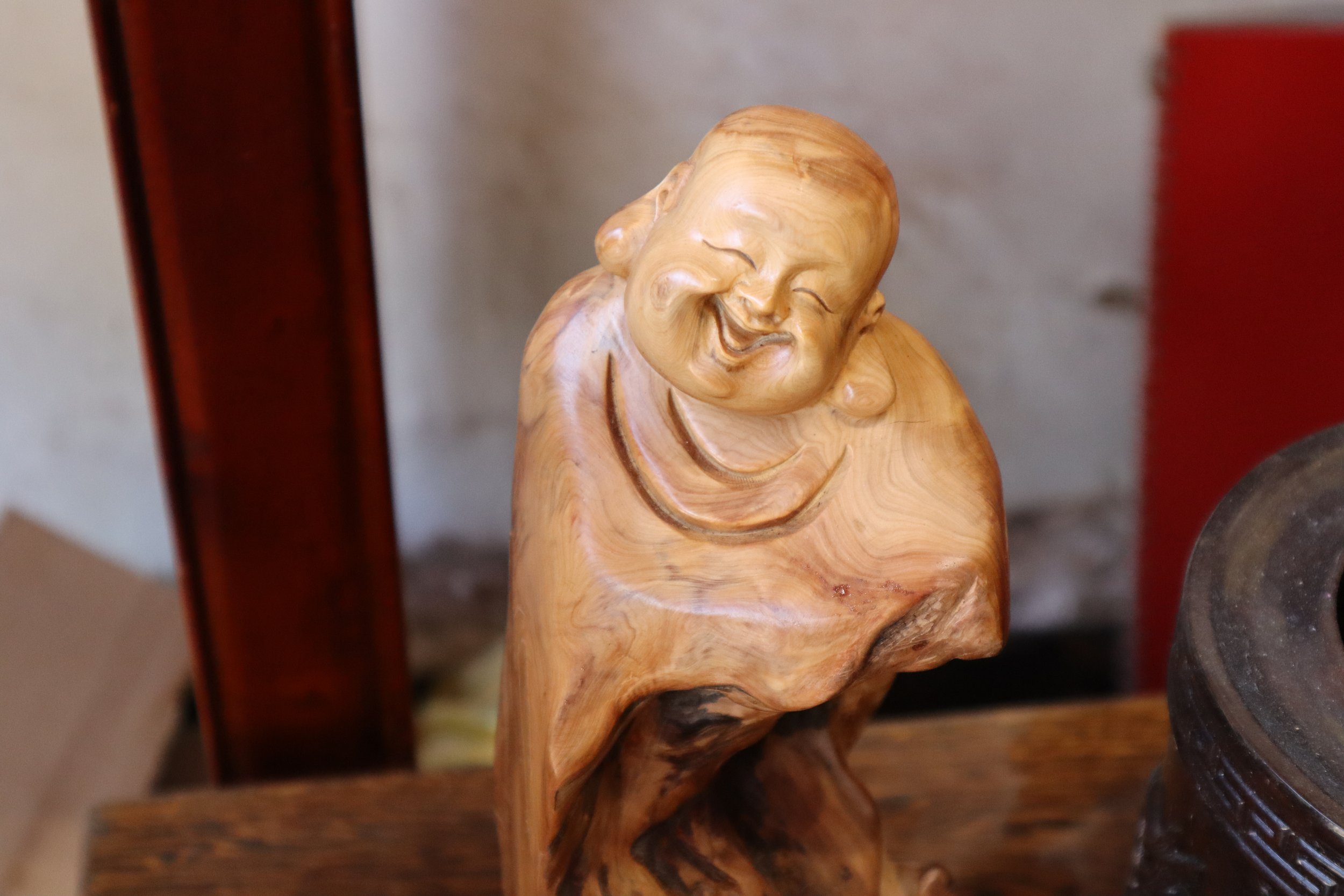
最爱这尊笑容灿烂的弥勒佛木雕

沙溪的喜林苑夯土酒店坐落在石宝山森林公园里,傍湖而建,伫立在湖山之间。外墙使用了当地特色的建材夯土和毛石砌筑的搭配,以深赤色的毛石墙为主色调。除了建筑设计很出彩以外,酒店还有图书馆,每年会和北上广深的国际高中以及美国大学合作提供交换课程和暑期游学,让来自不同背景的学生到镇子里实地体验当地文化。

Windows 桌面 IRL

酒店入口的木桥,连接着客房建筑群

白族歌舞表演和篝火晚会

钟爱这套古朴的白陶茶具

杨梅、荔枝和白桃都特别新鲜

妹妹在餐厅抓拍到的光影

每天的早餐肉燥米粉太快乐了

酱菜肉末豆腐

白豆炖猪蹄

03 苍山脚下的崇圣寺

大理在唐宋时期相继建立过南诏国大理国。大理国时期佛教盛行,因此大理也被誉为「佛都」。崇圣寺则是南诏、大理国皇家寺院,位于大理古城西北,苍山之下。千寻塔是典型的唐代建筑风格,始建于南诏时期(公元824-859年)。走进崇圣寺,印象最深刻的是建筑群的布局设计,从南到北,千寻塔、山门、大雄宝殿、以及观音阁都位于一条中轴线上,其余殿阁一一对称分布。从低往高处走,站在千寻塔前是完全看不到背后庞大的园林和建筑群的,每往高处走一段,新的建筑(比如山门)才缓缓出现在眼前。园林的设计也巧妙工整,有庄严的皇家气势。

崇圣寺的设计逻辑像是在循序渐进地与游人缓缓展开对话,能联想到交互设计中「渐进式呈现」(Progressive disclosure)的概念,每向前走一段时间,就能解锁新的景观和建筑。而站在这个中轴线的每一个位置,都能欣赏恰到好处、遥相呼应的风景。离开崇圣寺时快日落了,站在山脚下回头看了很久苍山上映着透过云层的光影。

千寻塔脚下

苍山下的崇圣寺三塔

在主塔台基石砌照璧上,嵌有明代万历年间黔国公沐英之孙沐世阶书写的「永镇山川」

04 大理古城北市早集

在大理古城的最后一天在北门市集转了转,是这些瞬间让大理变得具象又生动。

A tiny bar with flowers growing on walls

Couples dancing waltz in the park

Father and son sitting under a giant tree

Motorcycles and small town street view

Couplets for prosperity and good fortune
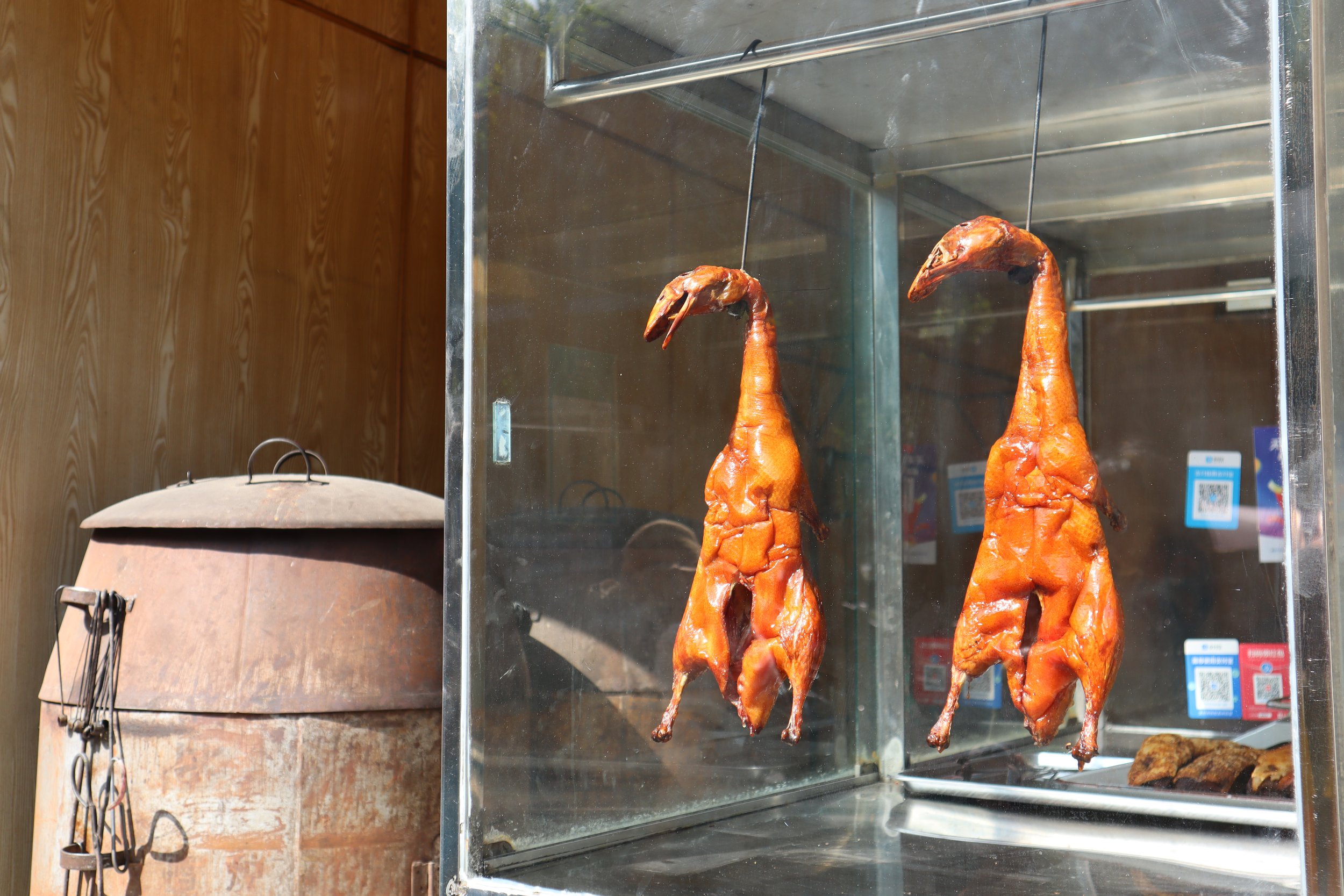
Roast goose 烤鹅

Pipa 枇杷

Hustling in the farmers market

Dai-flavoured pilaf 傣味手抓饭

Lychee 荔枝

谢谢大理的清净和滋养,下次再见啦!

置身事内:地方政府的制度设计

While visiting China in June, I read Xiaohuan Lan’s new book Chinese Government and Economic Development as an introduction to learn about how the government influenced and managed economic development in China. This post summarized my reading notes, including discussions on the operation model of a government-led economy, as well as its benefits and drawbacks in the long run.

六月在国内休假时读完了兰小欢 2021 年出版的《置身事内:中国政府与经济发展》,补充了很多中国政治经济的入门知识。很多术语和概念以前仅仅听过,却一直没有去认真理解中国政府、政策、经济与民生之间的关系,尤其政府是具体如何参与和推动经济发展的。

兰小欢在书中切入的角度偏学术研究,侧重于从社会运行的角度描述政府及其财政体系的运作模式。书中描述的政府对于企业的参与和扶持,实际上只侧重反映了政府对上市或过千万营收的大企业的扶持。书中没有提及政府对于中小企业的参与,实际上,从中小企业管理者的角度看来,政府对小企业的扶持极少。书中描述的是理论上政府在经济中的角色,并没有深入描述现实中出现的诸多问题,比如重复投资所带来的资源浪费、众多烂尾的大项目、政府扶持企业所引起的市场垄断、以及随之带来的市场效率降低和小企业的积极性减少等等。不过这本书作为入门读物,帮助读者建立基础认知还是很有帮助的。

01 地方政府的事权划分和制度设计

政府的核心任务是发展经济。而发展经济是一个复杂庞大的任务,需要各个政府层级协作,优化资源的分配和利用。那么具体怎么协作呢?这就需要决定好怎么样划分事权 —— 决定了做哪些事,才能决定用哪些资源,也就是「制度设计」。

我觉得最有趣的部分是借此观察事权分配的逻辑,并且比较政府管理和企业管理的相似和不同之处。一个企业,往往管理层的事权划分有按业务为边界划分的(比如 Head of Ads)、按职位类别划分的(比如 Head of Engineering)、或按地理边界划分的(比如 Head of APAC)。具体按什么为边界划分涉及到三个基本原则:规模经济(Economies of scale)、信息复杂性、和激励相容(Incentive compatibility)。

  • 规模经济(Economies of scale):在国家管理层面,这里具体指公共服务的规模经济。按照经典经济学的看法,政府的核心职能是提供公共物品和公共服务,比如国防和公园。这类物品一旦生产出来,大家都能用,用的人越多就越划算——因为建造和维护成本也分摊得越薄,即「规模经济」。

  • 信息复杂性:行之有效的管理,必然要求掌握关键信息,因此实际权威来自信息优势。而获取和传递信息需要花费大量时间精力,上级要不断向下传达,下级要不断向上汇报,平级要不断沟通,作为信息载体的文件和会议也成了权力的载体之一。因此,一套复杂的文件和会议制度就成了权力运作重要的部分。

  • 激励相容(Incentive compatibility):即一方想做的事,另一方既有意愿也有能力做好。发展经济是一个很宏观的工作,上级往往只有大致目标,需要下级发挥主动性和创造性调动资源去达成。首先要明确地方政府的权利和责任,一般一个地区谁主管谁负责,以行政区划为权责边界。其次是权力和资源的配置要制度化,不能朝令夕改。财政体制的设计也很重要,明确了收入和支出的划分,也就约束了谁能调用多少资源,不能花过头的钱,也不能随意借债。

这些原则的目的是为了有效处理不同群体的利益差别与冲突。完全没有冲突当然不可能,但如果能让各个群体对利益和代价的看法趋同,也能消解很多矛盾,增强互信。因此,国家对其公民都有基本的共同价值观教育,包括历史教育和国家观念教育。

02 招商引资和土地财政

中国地方政府的权力非常广泛,不仅提供公共服务,也深度参与经济的生产和分配。因此,招商引资不仅是招商局的职能,也是地方政府的核心任务。从生产和供给的角度,地方政府是城市土地的所有者,为了招商引资发展经济,会把工业用地以非常优惠的价格转让给企业使用,并负责对土地进行一系列初期开发,比如「七通一平」(通电、通路、通暖、通气、给水、排水、通信,以及平整场地)。

总的来说,对企业至关重要的生产要素,地方政府几乎都有很强的干预能力。其中土地直接归政府所有,资金则大多来自国有银行主导的金融体系和政府控制的其他渠道,比如国有投融资平台。对于劳动力,政府控制着户口,也掌握着教育和医疗等基本服务的供给,还掌握着土地供应,直接影响住房分配。而生产中的科技投入,也有相当大一部分来自公立大学和科研院所。除此之外,地方政府还有财税政策、产业政策、进出口政策等工具,都可能对企业产生重大影响。

政府的事权要求相应的财力支持,否则事情就办不好。事权与财力匹配很合理,但从预算收入的角度,地方政府是否也应该有与事权相适应的收钱的权力,让「事权与财权匹配」呢?实际情况是地方政府的支出和收入差距很大,地方财政预算支出一直高于预算收入。近些年地方预算支出占全国预算支出的85%,但收入只占50%—55%,入不敷出的部分则通过中央转移支付来填补。

1998年后,城市土地的真正价值才开始显现。1997—2002年,城镇住宅新开工面积年均增速为26%,五年增长了近4倍。一是单位取消住房福利的分配,而改为在工资中发住房补贴的形式,让职工凭个人的工资收入购买或租用住房,商品房和房地产由此开始兴起。二是修订后的《中华人民共和国土地管理法》开始实施后规定了农地想要转为建设用地必须经过征地后变成国有土地,确立了城市政府对土地建设的垄断权力。

土地财政」是什么?

为了应对财务压力,地方政府发展出了「土地财政」,即通过卖土地来获得巨额的土地使用权转让收入,以及与土地使用和开发有关的各种税收收入。其中大部分税收的税基是土地的价值而非面积,所以税收随着土地升值而快速增长。这些税收分为两类,一类是直接和土地相关的税收,主要是土地增值税、城镇土地使用税、耕地占用税和契税。2018年,这四类税收共计15081亿元,占地方公共预算收入的15%,相当可观。另一类税收则和房地产开发和建筑企业有关,主要是增值税和企业所得税。若把这些税收与土地转让收入加起来算作「土地财政」的总收入,2018年其收入相当于地方公共预算收入的89%。

出让的土地中,商住用地虽然面积中只占一半,但贡献了几乎所有土地使用权转让收入。因此「土地财政」实际上是「房地产财政」。地价的飞涨一方面随着各地补贴工业用地,大力招商引资,推动了制造业的快速发展;另一方面,随着工业化和城市化的发展,经济发达地区涌入大量新增人口,而这些地方的住宅用地供给却不足,房价自然飞涨,同时也带动地价飞涨。

土地财政的优势:资本化土地从而快速提供大量资金发展城市和工业

回到经济发展的本质,其实就是提高资源使用效率。而在中国的经济起步阶段,对于庞大的人口基数来说,自然资源相对贫乏。因此,能利用的资源主要是人力和土地。过去几十年的很多政策改革大多和盘活这两项资源、提高其使用效率有关。与人力相比,土地更容易被资本化,将未来的收益转化为今天高升的地价,为地方政府所用。因此,「土地财政」虽然有诸多弊端,但确实是过去这些年城市化和工业化得以快速推进的重要资金来源。

地方政府在招商引资和城市化的过程中,需要通盘考量税收收入和土地使用权转让收入,以达到总体收入最大化。举个例子,地方政府会压低工业用地价格,因为工业对经济转型的带动作用强,能带来增值税和其他税收,还能创造就业。而且工业生产率提升空间大,既能帮助本地实现现代化,也能带动服务业的发展,拉动商住用地价格上涨。另外,工业生产上下游链条长,产业集聚和规模经济效果显著,若能发展出特色产业集群(如佛山的陶瓷),也就有了长久的竞争优势和稳定的税收来源。

此外,地方之间招商引资竞争非常激烈。虽说工业和商住用地都由地方政府垄断,但工业企业可选择落地的地方很多,所以在招商引资竞争中地方政府很难抬高地价。商住用地则不同,主要服务本地居民,土地供应方的垄断力量更强,更容易抬高地价。因此,分税制改革后经济的快速发展得益于各个行政区通过税收和土地来进行招商引资的竞争,从激励相容的角度,上下级政府间层层承包责任和分享收益的制度框架。

经济学家张五常曾做过一个比喻:地方政府就像一家商场,招商引资就是引入商铺。商铺只要交一个低廉的入场费用(类似工业用地转让费),但营业收入要和商场分成(类似增值税,不管商铺是否盈利,只要有流水就要分成)。商场要追求总体收入最大化,所以既要考虑入门费和租金的平衡,也要考虑不同商铺间的平衡。一些商铺大名鼎鼎,能为商场带来更大客流,那商场不仅可以免除它们的入门费,还可以降低分成,甚至可以倒贴(类似地方给企业的各种补贴)。

土地财政的弊端地方政府的债务问题

土地的资本化运作,本质是把未来的收益抵押到今天去借钱,如果借来的钱投资质量很高,转化成了有价值的资产和未来更高的收入,那债务就不是大问题。但地方官员任期有限,难免会催生短视行为,寅吃卯粮,过度借债去做大项目。功是留在当代了,利是不是有千秋,就是下任领导的事了。如此一来,投资质量下降,收益不高,债务负担就越来越重。

制度一直如此,为什么前些年问题似乎不大?因为经济发展阶段变了。在工业化和城市化初期,传统农业生产率低,只要把农地变成工商业用地,农业变成工商业,效率就会大大提升。但随着工业化的发展,市场竞争越来越激烈,技术要求越来越高,先进企业不仅需要土地,还需要产业集聚、研发投入、技术升级、物流和金融配套等,很多地方并不具备这些条件,徒有大量建设用地指标不一定有用了。

另外,分税制改革之后,中央和省分成,省也要和市县分成。可因为上级权威高于下级,所以越往基层分到的钱往往越少,但分到的任务却越来越多,基层财政变得很困难。这最终涉及了财税体制的层级问题:要不要让财政制度更扁平化?如果要,具体怎么实施呢?

Photo by Ales Krivec on Unsplash

3. 土地金融

「土地金融」是什么?

再穷的国家也有大片土地,土地本身并不值钱,值钱的是土地之上的经济活动。若土地只能用来种小麦,价值便有限,但如果能吸引工商企业和人才,价值想象的空间就会被打开,笨重的土地就会展现出无与伦比的优势:它不会移动也不会消失,天然适合做各种资本交易的抵押,地价自然飞涨。

土地资本化的魔力,在于可以挣脱物理属性,在抽象的意义上交易承诺和希望,将过去的储蓄、现在的收入、未来的前途,统统汇聚和封存在一小片土地上,使其价值快速增长。由此产生的能量支撑起了工业化和城市化的巨大投资。经济发展的核心之一,正是把有形资产转变成为这种抽象资本,从而聚合跨越空间和时间的资源。

那么「土地金融」具体如何操作?

土地开发可细分为一级和二级开发。用术语来说,一块划出来的「生地」,平整清理后才能成为向市场供应的「熟地」,这个过程称为「土地一级开发」。「一级开发」投入大、利润低,且涉及拆迁等复杂问题,一般由政府融资平台公司完成。之后的建设和运营称为「二级开发」,大都由房地产公司来做。大多数城市的休闲娱乐项目。比如遍及全国的万达广场和上海新天地,都是政府一次性出让土地使用权,由民营企业(如万达集团和瑞安集团)开发和运营。当地的融资平台公司一般只参与前期的拆迁和土地整理。

与成都宽窄巷子或上海新天地这样的商业项目相比,开发工业园区更像基础设施项目,投资金额大(因为面积大)、盈利低,大都由融资平台类国企主导开发,之后交给政府去招商引资。政府付费使用私营企业开发建设的基础设施的模式叫「政府和社会资本合作」(Public-Private Partnership, PPP)。那么,企业和政府的边界在哪里呢?从实际业务和行为模式来看,融资平台类公司就是企业和政府的混合体,而民营企业如华夏幸福,又承担着政府的招商职能。现实世界中没有定义,只有现象,只有环环相扣的权责关系。或者按张五常的说法,只有一系列合约安排。

「城投公司」又是什么?

1994年分税制改革后,中央拿走了大部分税收。但因为有税收返还和转移支付,地方政府维持运转问题不大。但地方还要发展经济,要招商引资,要投资,都需要钱。土地价值飙升后,政府不仅靠土地使用权转让收入支撑起了「土地财政」,还将未来的土地收益资本化,从银行和其他渠道借入了大量资金,利用「土地金融」推动了快速的工业化和城市化。但同时也积累了大量债务。

这套模式的关键是土地价格。只要不断地投资和建设能带来持续的经济增长,城市就会扩张,地价就会上涨,就可以偿还连本带利越滚越多的债务。可经济增速一旦放缓,地价下跌,土地出让收入减少,累积的债务就会成为沉重的负担,可能压垮融资平台甚至地方政府。

为解决这三个问题,城投公司(即城市建设投资公司)就诞生了,即全国各大城市政府的投资融资平台。发明这套模式的是国家开发银行。1998年,国家开发银行(以下简称「国开行」)和安徽芜湖市合作,把8个城市建设项目捆绑在一起,放入专门创立的城投公司芜湖建投,以该公司为单一借款人向国开行借款10.8亿元。这对当时的芜湖来说是笔大钱,为城市建设打下了基础。当时还不能用土地生财,只能靠市财预算安排的偿还基金做偿债来源。

2002年,全国开始推行土地「招拍挂」(招标、拍卖与挂牌),政府授权芜湖建投以土地出让收益做质押作为还款保证。2003年,在国开行和天津的合作中,开始允许以土地增值收益作为贷款还款来源。这些做法后来就成了全国城投公司的标准模式。

政府投资和土地金融的发展模式的利弊

地方主官任期有限,要想在任内快速提升经济增长,往往只能加大投资力度,上马各种大工程、大项目。以市委书记和市长为例,在一个城市的平均任期不过三四年,而基础设施或工业项目最快也要两三年才能完成,所以往往「新官上任三把火」:上任头两年,基础设施投资、工业投资、财政支出往往都会快速上涨。而全国平均每年都有三成左右的地级市要更换市长或市委书记,所以各地的投资都热火朝天,「政治-投资周期」比较频繁。

投资需要资金,需要土地财政和土地金融的支持。所以在官员上任的前几年,土地出让数量一般都会增加。而新增的土地供应大多位于城市周边郊区,所以城市发展就呈现出了一种「摊大饼」的态势:建设面积越扩越大,但普遍不够紧凑,通勤时间长、成本高,加重了拥挤程度,也不利于环保。

虽然官员的晋升动机与促进经济增长目标之间不冲突,也对地区经济表现有相当的解释力,但这种偏重投资的增长模式会造成很多不良后果。

  • 2016年之前,官员升迁或调任后就无需再对任内的负债负责,而新官又通常不理旧账,会继续加大投资,所以政府债务不断攀升。在经济发展到一定阶段之后,低风险高收益的工业投资项目减少,基础设施和城市建设投资的经济效益也在减弱,继续加大投资会降低经济整体效率,助推产能过剩。此外,出于政绩考虑,地方官员在基础设施投资方面常常偏重「看得见」的工程建设,比如城市道路、桥梁、地铁、绿地等,相对忽视「看不见」的工程,比如地下管网。

  • 政府投资和土地金融的发展模式,一大弊端就是腐败严重。与土地有关的交易和投资往往金额巨大,且权力高度集中在个别官员手中。近些年查处的大案要案大多与土地有关,在最高检《检察日报》从2008年到2013年报道的腐败案例中,近一半与土地开发有关。

  • 1994年分税制改革后,财权集中到了中央,但通过转移支付和税收返还,地方政府有足够的财力维持运转。但几乎所有省份,无论财政收入多寡,债务都在飞速扩张。可见政府债务问题根源不在收入不够,而在支出太多,因为承担了发展经济的任务,要扮演的角色太多。因此债务问题不是简单的预算约束问题,也不是简单修改政府预算框架的问题,而是涉及政府角色的问题。为了改善这些问题,未来的路径是逐渐简政放权,从生产投资型政府逐步转向服务型政府。

Photo by Jacek Dylag on Unsplash

04 政府深度参与工业化经济

现实世界没有清楚的「市场」和「政府」分界,只有利益关系环环相扣的各种组合。中国经济的起点是计划经济,所以地方政府掌握着大量资源(土地、金融、国企等),不可避免会介入实业投资。

生产复杂产品的能力与法制和营商环境直接相关。从2000年到2018年,中国出口商品的复杂程度从世界第39位上升到了第18位。这不仅反映了技术能力和基础设施等硬件质量的提升,也反映了营商环境和法制环境等软件质量的提升。因为复杂的产品和产业链涉及诸多交易主体和复杂商业关系,投资和交易金额往往巨大,所以对合同的制订和执行、营商环境稳定性、合作伙伴间信任关系等都有很高要求。各国产品的复杂程度与本国法制和营商环境之间直接相关。

新型制造业如何选址?新兴制造业在地理上的集聚效应很强,因为扎堆生产可以节约原材料和中间投入的运输成本,而且同行聚集在一起有利于知识和技术交流,外溢效应很强。因此产业集群一旦形成,自身引力会不断加强,很难被外力打破。但在产业发展早期,究竟在哪个城市形成产业集群,却有很多偶然因素。大部分新兴制造业对自然条件要求不高,不会特别依赖先天自然资源,而且我国基础设施发达,物流成本低,所以一些内陆的中心城市虽然没有沿海城市便利,但条件也不是差很多。这些城市若能吸引一些行业龙头企业落户,就有可能带来一大片相关企业,在新兴产业的发展中占得一席之地,比如合肥的京东方和郑州的富士康等。

政府扶持行业的负面影响:引起产能过剩和重复投资

很多行业都有很强的周期性。市场价格高涨时很多企业进入,供给快速增加,推动价格大跌,让不少企业倒闭,而低价又会刺激和创造出更多新的需求和应用场景,推动需求和价格再次上涨。一个例子是显示面板,这种周期性的产能过剩已经清洗掉了很多企业,行业中心也在一轮轮的清洗中从美国转到日本,再到韩国和台湾,再到大陆。招商引资竞争所引发的重复建设确实屡见不鲜,尤其在那些技术门槛较低、投资额度较小的行业,比如曾经的光伏行业。

  • 无论是欧美还是日韩,光伏的需求都是由政府补贴创造出来的。中国在开始进入这个行业时面临:需求和市场来自海外,关键技术和设备来自海外,关键原材料也来自海外。所以基本就是一个代工行业。但当时光伏发电成本太高,国内市场用不起。在地方政府廉价的土地和信贷资源支持下,大量本土光伏企业在海外用低价占领市场,并在这个过程中不断技术创新,逐步进入技术更复杂的产业链上游,以求在产能过剩导致的激烈竞争中占据优势。但由于最终市场在海外,所以一旦遭遇欧美「双反(反倾销、反补贴)」,就从需求端打击了全行业,导致大量企业倒闭。

  • 但积累的技术、人才、行业知识和经验,并不会随企业破产而消失。一旦需求回暖,这些资源就又可以重新整合。2013年以后,国内市场需求打开,光伏发展进入新阶段。因为整条产业链都在国内,所以同行沟通成本更低,开始出现全产业链的自主和协同创新,各环节共同优化,加速了技术进步和成本下降。这又进一步扩大了我国企业的竞争优势,更好地打开了国外市场。2018年以后,低价高效的光伏技术刺激了全球需求的扩张。中国企业当年开拓海外市场的经验和渠道优势,现在又成了它们竞争优势的一部分。

  • 从光伏产业的发展中,我们还可以看到「东亚产业政策模式」的另一个特点:强调出口。当国内市场有限时,海外市场可以促进竞争,迫使企业创新。补贴和优惠政策难免会产生一些低效率的企业,但这些企业在面对挑剔的海外客户时,是无法过关的。而出口量大的公司,往往是效率相对高的公司,它们市场份额的扩大,会吸纳更多的行业资源,压缩国内低效率同行的生存空间,淘汰一些落后产能。当然,中国要应对的国际局势变幻比小国更加复杂,所以不断扩大和稳定国内市场,才是行业长期发展的基础。另一方面,若地方政府利用行政手段阻碍落后企业破产,就会阻碍优胜劣汰和效率提升,加剧产能过剩的负面影响。

政府扶持行业的负面影响:资源错配和浪费

就算中央政府提倡的产业政策是普惠全行业的,并不针对特定企业,但到了地方政府,政策终归要落实到「特定」的本地企业头上。若地方政府保护本地企业,哪怕是低效率的「僵尸企业」也要不断输血和挽救,做不到劣汰,竞争的效果就会大打折扣,导致资源的错配和浪费。这是很多经济学家反对产业政策的主要原因。尤其是,我国地方政府有强烈的大项目偏好,会刺激企业扩张投资。企业一旦做大,就涉及就业、稳定和方方面面的利益,不容易破产重组。

重复投资的一个好处是能够「保持竞争」

所以在很长一段时间内,「成本创新」是本土创新的主流。虽然被西方讽为仿造和山寨,但其实成本创新和功能简化非常重要。因为很多在发达国家已经更新迭代了多年的产品,小到家电大到汽车,而当时中国消费者都是第一次使用。这些复杂精密的产品价格高昂,让试用者望而却步。如果牺牲一些功能和质量能让价格大幅下降,就有利于产品推广。当消费者开始熟悉这些产品后,会逐步提升对质量的需求。正因如此,很多国产货都经历了所谓「山寨 + 价格战」的阶段。但行业正是在这种残酷的竞争中迅速洗牌,将资源和技术快速向头部企业集中,质量迅速提高。就拿家电行业来说,国产货从起步到质优价廉、服务可靠、设计精美,占领了大部分国内市场,也就是20年的时间。市场经济的根本优势不是决策优势,而是可以不断试错,在竞争中优胜劣汰。

什么是「政府产业引导基金」?

政府产业引导基金既是一种招商引资的新方式和产业政策工具,也是一种以市场化方式使用财政资金的探索。与地方政府投资企业的传统方式相比,产业引导基金或投资基金不直接投资企业,而是做LP,把钱交给市场化的私募基金的GP去投资企业。一支私募基金的LP通常有多个,不止有政府引导基金,还有其他社会资本。因此通过投资一支私募基金,有限的政府基金就可以带动更多社会资本投资目标产业,故称为「产业引导」基金。同时,因为政府引导基金本身就是一支基金,投资对象又是各种私募基金,所以也被称为「基金中的基金」。

  • 政府产业引导基金的弊端:财政资金的地域属性与资本无边界之间的矛盾。在成熟的资本市场上,机构类LP追求的就是财务回报,并不关心资金具体流向什么区域,哪里挣钱就去哪里。但地方政府引导基金源自地方财政,本质还是招商引资工具,所以不可能让投资流到外地去,一定要求把产业带到本地来。

  • 无论是土地还是税收优惠,都无法改变招商引资的根本决定因素,即本地的资源禀赋和经济发展前景。在长三角、珠三角以及一些中心城市,大企业云集,各种招商引资工具包括引导基金,在完成招商目标方面问题不大。但在其他地区,引导基金招商作用其实不大,反而造成了新的扭曲。有些地方为吸引企业,把本该是股权投资的引导基金变成了债权工具。

  • 比如说,引导基金投资一亿元,本应是股权投资,同赚同亏,但基金却和被投企业约定:若几年后赚了钱,企业可以低价回购这一亿元的股权,只要支付本金再加基本利率(2%—5%)就行;若企业亏了钱,可能也需要通过其他方式来偿还这一亿元本金。这就不是股权投资了,而是变相的低息贷款。

  • 再比如,引导基金为吸引其他社会资本一起投资,承诺未来可以收购这些社会资本的股权份额,相当于给这些资本托了底,消除了它们的投资风险,但同时也给本地政府增加了一笔隐性负债。这种「名股实债」的方式违背了股权投资的原则,也违背了「去杠杆」和解决地方政府债务问题的初衷,是中央政府明确禁止的。

Photo by Tono Graphy on Unsplash

05 城市化与房地产

城市化的所需要的钱从哪里来?

城市化需要投入大量资金建设基础设施,而「土地财政」和「土地金融」是非常有效的融资手段。通过出让城市土地使用权,积累以土地为信用基础的原始资本,推动工业化和城市化快速发展。

中国特有的城市土地国有制度,为政府垄断土地一级市场创造了条件,将这笔隐匿的财富变成了启动城市化的巨大资本,但也让地方财源高度依赖土地价值,依赖房地产和房价。房价连着地价,地价连着财政,财政连着基础设施投资,于是经济增长、地方财政、银行、房地产之间就形成了「一荣俱荣,一损俱损」的关系。 这种以土地为中心的城市化忽视了城市化的真正核心:人。地价要靠房价拉动,但房价要由老百姓买单,按揭要靠买房者的收入来还。所以土地的资本化,实质是个人收入的资本化。

房地产的供需矛盾

房地产常被称作「经济周期之母」,根源就在于其内在的供需矛盾:一方面,银行可以通过按揭创造几乎无限的新购买力;而另一方面,不可再生的城市土地供给却有限。这对矛盾常常会导致资产泡沫与破裂的周期循环,是金融和房地产不稳定的核心矛盾。而房地产不仅连接着银行,还连接着千家万户的财富和消费,因此影响很大。

缩小贫富差距的本质是让人和土地自由流动,价值才会增长

要实现地区间人均收入均衡、缩小贫富差距,就要增加低收入群体的流动性和选择权,帮他们离开穷地方,去往能为他的劳动提供更高报酬的地方,让他的人力资本更有价值。同时也要允许农民所拥有的土地流动,这些土地资产才会变得更有价值。

累积的财富差距一般远大于每年的收入差距,因为有财富的人往往更容易积累财富,资产回报更高,可选择的投资方式以及应对风险的手段也更多。按照中国人民银行对城镇居民的调查数据,2019年净资产最高的20%的家庭占有居民全部净资产的65%,而最低的20%只占有2%。在经济发达、资产增值更快的沿海省份,父母累积的财产对子女收入的影响,比在内地省份更大。当经济增速放缓、新创造的机会变少之后,年轻人间的竞争会更加激烈,而其父母的财富优势会变得更加重要。

中国的城市化的三个阶段

第一阶段是1994年之前,乡镇企业崛起,农民离土不离乡,城市化速度不快。第二阶段是1994年分税制改革后,乡镇企业式微,农民工进城大潮形成。这个阶段的主要特征是土地的城市化速度远远快于人的城市化速度,土地撬动的资金支撑了大规模城市建设,但并没有为大多数城市新移民提供应有的公共服务。第三个阶段是十八大以后,城市化的重心开始逐步从「土地」向「人」转移。

Photo by Ales Krivec on Unsplash

对于中国政治经济这个庞大复杂的课题,《置身事内》带我认识了一些最基础的概念,但实在还有太多需要学习的了,若笔记中有错漏偏颇之处,请大家评论指正。

怦然心动的人生整理魔法

“经过整理,物品减量之后,自己在生活中重视的是什么,还有价值观,都变得一目了然。并非是要一味地追求物品减量,有效收纳,而是要去尝试用心动的感觉选择物品,并学会用自己的基准享受生活,这才是整理的奥义。” —— 近藤麻理惠

读近藤麻理惠的《怦然心动的人生整理魔法》的契机是因为近两年一直在思考怎么样建立一个简单清爽,可持续,又适合自己的生活和信息汲取系统,进而释放更多能量和精力给真正重要的事情。实际上,写这个订阅周报也源于想要建立一个更专注的信息汲取机制,给自己充分的理由在两周内只集中阅读某一方向的信息,而不会感到焦虑或信息过载。今年受好友的启发,开始尝试「断舍离」的生活方式,于是想认真了解这类生活方式背后的理论。一口气读完这本书后,对「整理」这件看似平平无奇的事情也有了全新的认识。

Photo by aranprime on Unsplash

01 透过整理物品,去面对自己「过去的执着」和「对未来的不安」

在开始整理前,需要仔细思考整理的目的,这也可以说成是「思考理想的生活」。思考「为什么想要过这样的生活」时,对于自己说出的回答,要反复追问自己「为什么?」三到五次。如此一来,开始整理后该做的其实只有两件事,那就是「判断物品是否要丢掉」和「决定物品的定位」。判断物品该留下或是丢掉时,应该以「拥有这样物品是否幸福」作为标准,也就是说「拥有时是否感到心动」。把东西一个一个拿在手里「触碰时是否怦然心动?」是判断时最简单又正确的方法,因为只被心动的东西所围绕的生活才是我们想拥有的人生。按「物品类别」,以「正确的顺序」,只留下「心动的东西」。这件事要「一口气」,在「短时间」内「彻底」完成。

多数人不会整理的最大原因就是东西太多;而东西不断增加的最大原因是因为没有掌握自己现有物品的数量;而这其实是因为收纳场所分散所致。因此,整理的关键之一是按照物品类目,而不是房间来思考。把同一类目的物品集中在一处,会被迫发现一直逃避而不得不解决的问题。人们常常通过收纳把不要的东西盖上盖子,乍看之下误以为问题好像解决了,但其实只是装作没看见而已,并非真正的整理,这样就会陷入一种恶性循环。整理的过程中,透过用手触摸带着回忆的物品,才能与过去面对面。若一直被放在抽屉或箱子里,不管过了多久,都还是会被过去的回忆所牵制,而这些东西或许会在不知不觉之间变成现在的「包袱」。所谓的整理,就是整理每一个过去,让人生可以重新出发。

人们无法丢东西的原因其实只有两个,那就是「对过去的执着」与「对未来的不安」。掌握「自己拥有物品的确切数量」之所以重要,是因为这往往代表了自己生命里的价值观。拥有什么东西,就等同于你的生活态度。了解你拥有物品的方式,也能从中发现你在做一切选择时共通的原则和与人交往的模式,或是选择工作的方式。因为看不清对自己而言必要的东西或自己追求的东西,所以才更容易在不知不觉中增加了不需要的东西,让自己无论在物质或精神上都不断地被不需要的东西所淹没。那么,该怎么才能理清「现在对自己而言必要的东西」呢?不必到远处去寻找,也不必买新的。只要真心地面对自己所拥有的东西,减少不需要的东西即可。

02 认真倾听身体的声音

整理是一件完全不需要与他人比较,基准完全掌握在自己手上的事情。人要被什么样的环境所环绕才觉得幸福,只有当事人能决定。因此,对每一样物品都认真面对「自己的感受」就变得非常重要。占着大量的东西不丢,并不代表就是爱惜物品。恰恰相反,透过减量到自己能够确切掌握和面对的程度,物品与你的关系才会充满生命力。「用是否心动来判断」听起来很抽象,但实际上用某一个理想的数字,比如「两年没用就丢掉」,「买一样就丢一样」或「十件衬衫」才是会反复变乱的原因。因为采用的是他人提示的基准,并不一定符合自己内心觉得舒服的基准,就算暂时变得整齐,最后又会开始变乱。

认真整理时,虽谈不上是进入冥想状态,却会产生一种平静地与自己面对面的感觉。郑重其事地与自己拥有的物品面对面,一一地去感受是否心动,或是有其他的感觉,对已经完成任务的物品表达谢意之后,送走它们,就好像是透过物品与自己对话。面对自己拥有的物品并决定是否丢掉其实是痛苦的过程,因为你会看到过去选择背后的愚蠢,糊涂,无聊和缺点,比如那些明明不需要却因为虚荣买下的贵重的东西,或是逞强买下却完全不适合自己的衣服。东西之所以存在,就是自己的选择造成的结果,不能怪别人。最危险的是明知道这些东西的存在,却装作没看见,仿佛像否定自己的选择一样,粗鲁地把东西丢掉。唯有一一面对每一项物品,好好体验其中的情感之后,才能真正消化与物品的关系,看清对现在的自己而言真正重要的东西。

03 重新思考每件物品所具备的真正功能

「为什么会有这样东西呢?」有时候,如果在买下一件衣服的那一瞬间曾经让你心动,那它就完成了一项任务,就是赋予你「买下那一瞬间的感动」。如果这样的结果让你之后不再买同样的衣服,明白「这种衣服原来不适合自己」,也是这件衣服另一项重要的任务。那么,这件衣服已充分完成了自己的任务。每样东西都有它不同的任务,并非所有衣服都要被完全穿坏才来到你身边。这与人与人之间的缘分一样,所遇见的人并非都会变成挚友或恋人。正因为有些人让你觉得「我有点害怕这种人」或「我就是和这种人合不来」,你才会再次体会到「我还是比较喜欢这个人」,越珍惜与这个人的关系。对于「虽不心动,但就是没办法丢掉」的东西,尤其需要一一思考它们的任务。你就会出乎意料地发现,很多东西其实已经完成他们的任务了。我们要做的其实是好好面对物品为我们完成的任务,表示感谢然后放手痛快地解放它们。经过这个过程留下来的东西,才是你真正应该珍惜的东西。

比如书真正肩负的任务是阅读的体验。于是这周重新整理了书柜后,决定捐出42本不再需要的书。很多书陪伴了我快十年,从高中和本科时期就一直带在身边,每次搬家都觉得有它们在身边才比较安心。通过这次整理,在认真面对每一本书带给我的感受时,能观察到这些年自己兴趣的变化。不少要捐掉的书是本科读文学和政治专业课留下来的,如今只保留了对我影响深远的几本;一些商业创业类的书作为工具看电子版就足够;行为科学的知识我偏好直接看论文,所以通俗类的入门书也不再需要。反而是泛设计类,经济学,历史哲学,艺术史,和中英文古典著作都原封不动地保留下来了。书柜里收藏了各个版本的《红楼梦》收藏版和画册,光是看到它们在书架上就觉得「有这本书在这真幸福!」令人时时刻刻心动。当手边不放过多的信息时,对信息的敏感度反而会提高,更容易发现对自己而言必要的信息。除了书以外,也重新整理了礼物。礼物真正的任务是「接受」,送礼物更重要的是传递心意。因此,像近藤麻理惠说的,对一些此刻不再感到心动的礼物致谢后,就可以丢掉了。去体察「当下的心动」,而不是过去的心动。

04 训练判断力和重获决断的信心

人之所以无法丢东西,通常是因为还能用(功能上的价值),还有用(信息上的价值)或还有感觉(感情上的价值)。若再加上很难取得或难以取代的话(稀少价值),就更难以放手了。一开始从难度较低的东西(如衣服和书)开始丢,然后阶段性地培养在整理上的判断力,才比较容易有所进展。因此,顺利丢掉东西的基本顺序依次为:衣服,书籍,文件,小东西,最后才是纪念品。按照这个顺序整理,就能自然而然地训练出识别心动或不心动的感觉。整理魔法的效果之一,就是开始能对自己的判断有自信。在整理过程中,透过重复判断「是否觉得心动」这个瞬间几百次,几千次,判断力自然就被磨练的越来越敏锐。

透过不断地丢东西,就不会想把判断的责任交给别人。换句话说,在发生问题时,不再觉得「那个时候,那个人这么说」,而想把原因归咎于外部。开始能够觉得一切都应该靠自己的判断,重要的是现在该如何行动。有时人们也会因为手边随时都有信息,所以才不付诸行动。所以整理的重点是只留下「心动的」,而不是「可能会用到的」,比如囤积生活用品或者电器说明书之类的,其实只要付诸行动,就能在必要时得到自己需要的信息,比如打电话去电器维修就能找到说明书上相关的内容。这种「就算没有东西也总有办法」的感觉,一旦体验过了,一下子就会变得轻松许多。

你拥有的东西,会正确地诉说自己的选择历史。因为整理也是为了发现自己喜欢事物的自我盘点。达到整理彻底完成的状态时,就不用再想整理的事,所以对人生而言重要的课题自然也会变得明确。整理之后,也更能明白「什么叫做足够」,人能够以最自然的状态生活,珍惜对现在的自己而言真正重要的东西。因此整理房屋最好要迅速完成,因为整理并不是人生的目的,真正的人生在「整理之后」才开始。

Photo by Jason Wang on Unsplash

Improv comedy and collective imagination

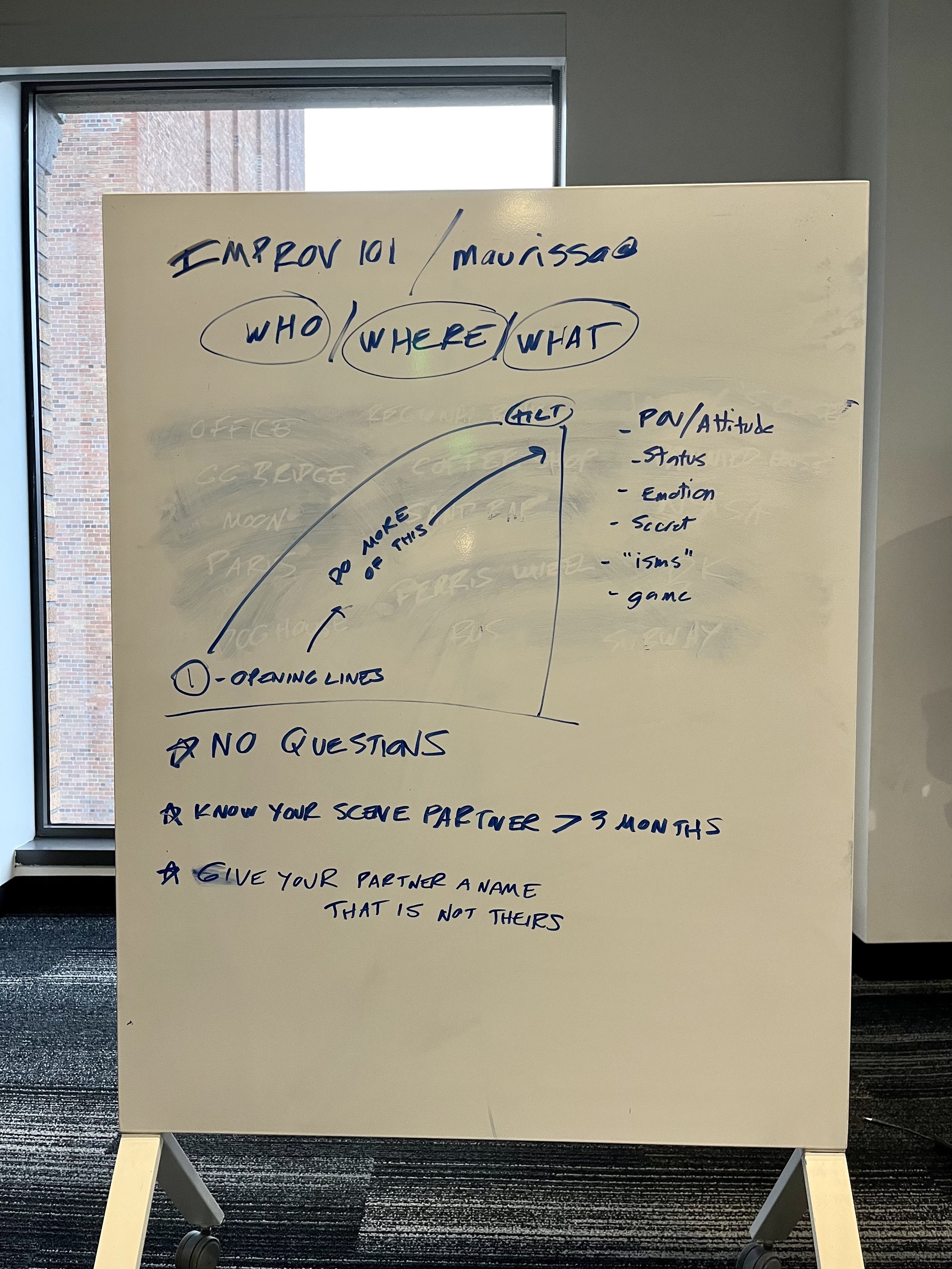
Recently, I completed a 6-week Improv 101 class and had a lot of fun trying out acting and improvisational comedy for the first time. I was initially curious about improv because its philosophy is very similar to design thinking and participatory design methods. Although improv comedy and design thinking may seem unrelated, they actually share important principles around creativity and collaboration.

As I learned more each week, I realized that the art of improv is not only about being funny, but also about behavioral observations and analysis, creating and deepening relationships, and understanding power dynamics, among other things.

Rule-of-thumb: “Yes, and …” and avoid asking questions

The "Yes, and …" rule is a guiding principle in improvisational comedy. It advises improvisers to accept (”yes”) and build on what their partner has stated (”and”). The “Yes” portion of the rule encourages the acceptance of the contributions added by others, fostering a sense of collaboration, rather than denying the suggestion or ending the line of communication.

Another helpful rule is to avoid asking questions. This can be difficult to follow at first, since we often ask questions for clarification or to learn more. However, asking questions in an improv context does not build or expand on your partner's input. Instead, it’s best to rephrase questions into statements and hand them over to your partner to move the plot forward.

After we get comfortable with following the “Yes, and …” rule, it feels just like the idea generation process in design thinking. The feeling of letting go of control and embracing uncertainty is similar to rapidly iterating crazy new ideas without judgement in product design. It reminds me of a design workshop like crazy 8s, a fast sketching exercise that challenges people to sketch eight distinct ideas in eight minutes, with the goal of generating a wide variety of solutions to your design challenge. Creativity, collaboration, and collective imagination are the key spirits of improv, which are also qualities commonly shared in a good design brainstorming session.

Establish relationships and keep the plot moving

Every week, we learn about different techniques that help us establish partner relationships, set the scene, and keep the story progresses.

  • Naming and Identity: Assigning a name other than your partner's real name, such as "Josh," can help them establish a fictional character and give them permission to unleash their imagination. Assigning an identity, such as "captain" or "principal," also helps establish the scene by framing their roles. In this case, it can ground the scene in a specific setting, such as a ship, sports team, or school.

  • Social status: Assigning a rank to individuals in a group immediately shapes their relationships with each other. It influences how they choose to look, act, and respond to people with different ranks.

  • Holding on to a secret: When developing a scene with your partner, you can imagine that you are holding on to a secret. This secret could be something like "please don't leave me" or "I'm ashamed." Your partner may also be holding on to a secret. This approach is similar to design thinking, where a particular user group may have persistent, hidden motivations or needs that will manifest in different forms in a user journey. Understanding these "secrets" is key to unpacking people's behavior on the surface. This concept also occurs in psychotherapy, where certain internal motivations, fears, or desires drive consistent behavioral patterns. It is only when the client becomes aware of these persistent, hidden triggers that they can gain a new understanding about themselves and assess them objectively.

  • Choosing a posture: It's no surprise that your body language when sitting, standing, or walking can reveal a lot about your character. For example, leaning forward while sitting on a chair may make you seem attentive, nervous, or younger. Holding one hand under your chin may make you seem observant, judgmental, or thoughtful. In one class, everyone sat in a circle and took turns analyzing each other's posture while sitting on a chair. Then, based on the information inferred from the posture, each person started an opening line.

  • Overusing a word: You can choose to overuse certain words such as "like," "awesome," "honestly," or "actually." These words can become a part of your language system and act as signals that guide you as you establish and develop your character.

  • Emotion: Assigning a mood or emotion to your partner's character is a common way to establish their personality and the scene. For example, the opening line could be "You seem [sad, anxious, nervous, happy, scared]."

  • Relationship history: Setting the rule of knowing your partner for more than 3 months adds depth and shared memories to the relationship. This can be used to expand the story and shape both of your characters.

Our Improv instructor Maurissa holding the drawing co-created by our class

Status game as a social experiment

One of the most memorable exercises during class is the status game. You get assigned a card with a rank from 2 to ace, without knowing your own card. You have 15 minutes to socialize with everyone else, who you imagine you're at a party with, and figure out your rank. Then, everyone lines up from low to high, and you try to guess your relative ranking.

For example, you are more likely to approach and talk to someone who has a similar ranking as you. When people with significantly higher status approach you, you may appear more respectful and attentive, whereas you may seem more impatient or dismissive when people with significantly lower status approach you. Therefore, if you are either on the higher or lower ends of the rank, it’s relatively easier to tell based on the kinds of numbers that proactively approach you. But if you’re in the middle rank, such as 6 or 7, it can be harder to assess.

It's interesting to observe how people's actions can be influenced by the cards they receive and the power dynamics within relationships. It brought to mind the 1971 Stanford Prison Experiment, a psychological study that explored how roles, labels, and social expectations affected behavior in a simulated prison environment. While the status game is not as extreme as a prison environment, it highlights how status plays a significant role in shaping and defining relationships.

In addition, when someone is given a certain status, people often make assumptions based on that rank. These assumptions are used as a guide for the character and their partners to act in the story. For instance, status is often linked to wealth, political position, career, attitude, and lifestyle.

In a different situation, two people of different social status are waiting for a bus at a bus station. Their status may influence how they look, stand, and act. The person with the higher status may intentionally keep their distance from the person with lower status while waiting, and may be more relaxed since they can afford to take an Uber instead. On the other hand, the person with the lower status may appear more anxious and stressed because taking the bus is their only affordable option to get to work.

Final thoughts

The most counterintuitive moment for me was when I realized that all of these improv techniques are about giving structures and signals to help actors build their relationships as the story progresses. I used to think the plot came first, and that characters were just there to act it out. But in improv, I see that by focusing on the characters and exploring the complexity, nuance, and layers of their relationships, the story will naturally progress in interesting ways. This is similar to the logic behind producing reality shows. By inviting celebrities with distinct characters and capturing their interactions and relationships, an entertaining show can be created without the need for elaborate storylines or scripts.

Photo essay: museums in Boston

When I wrote this post, I had the song Dancing with my phone by HYBS playing in the background. You can try that while reading, too. Totally optional.

Institute of Contemporary Art, Boston

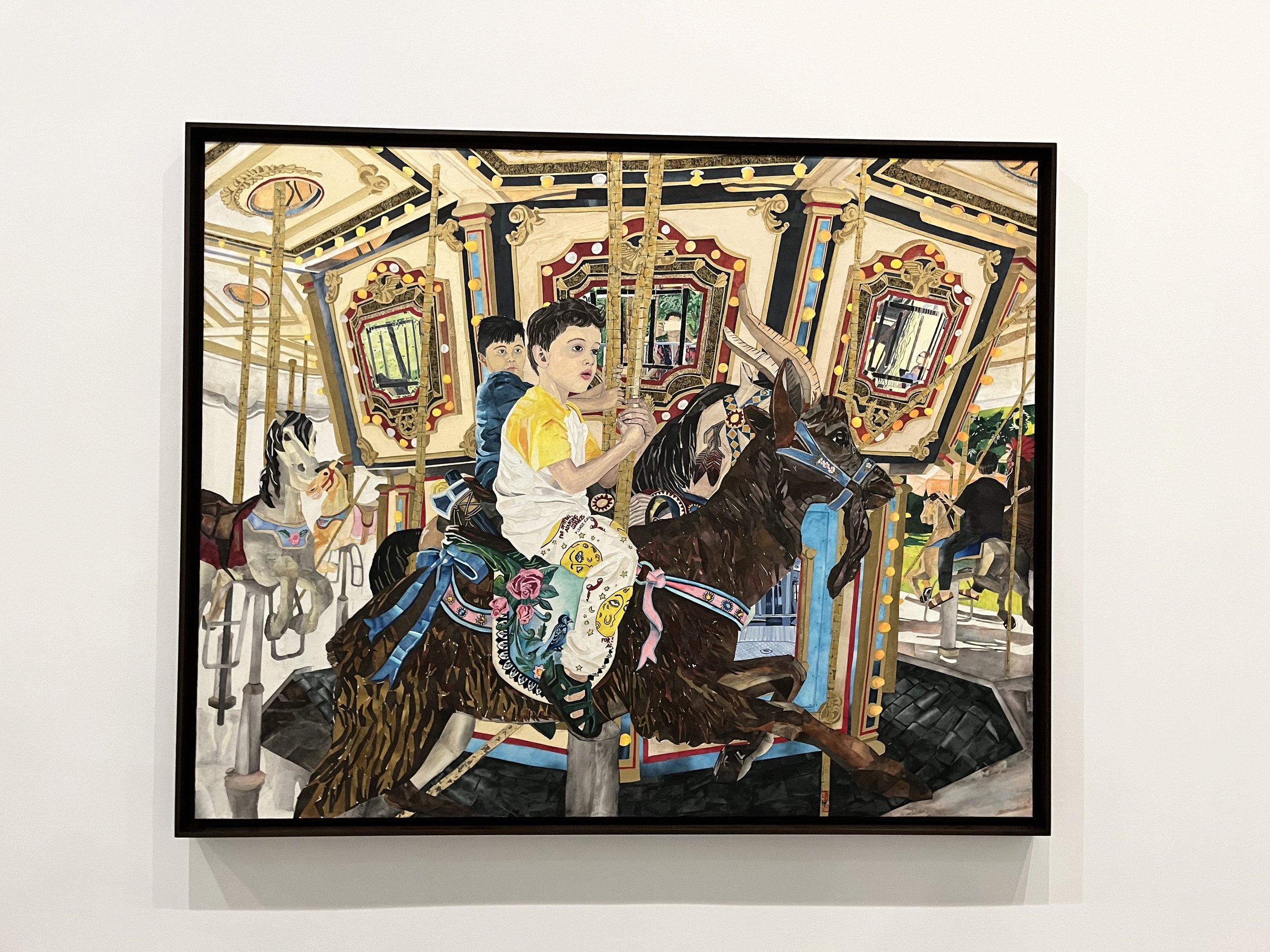
María Berrío is a Colombian-born visual artist based in New York City, who crafts her large-scale paintings through a meticulous process or collaging layers of Japanese paper with watercolor. When I visited the Institute of Contemporary Art Boston (ICA) on March 4, 2023, her exhibition The Children’s Crusade was on display. Her series blends the history of the Children’s Crusade of 1212 with the contemporary mass movement of peoples across borders.

Cavalry, 2022. Collage with Japanese paper and watercolor paint on canvas. Interesting to note the dynamics between the children and their guardians (reflected in the mirror).

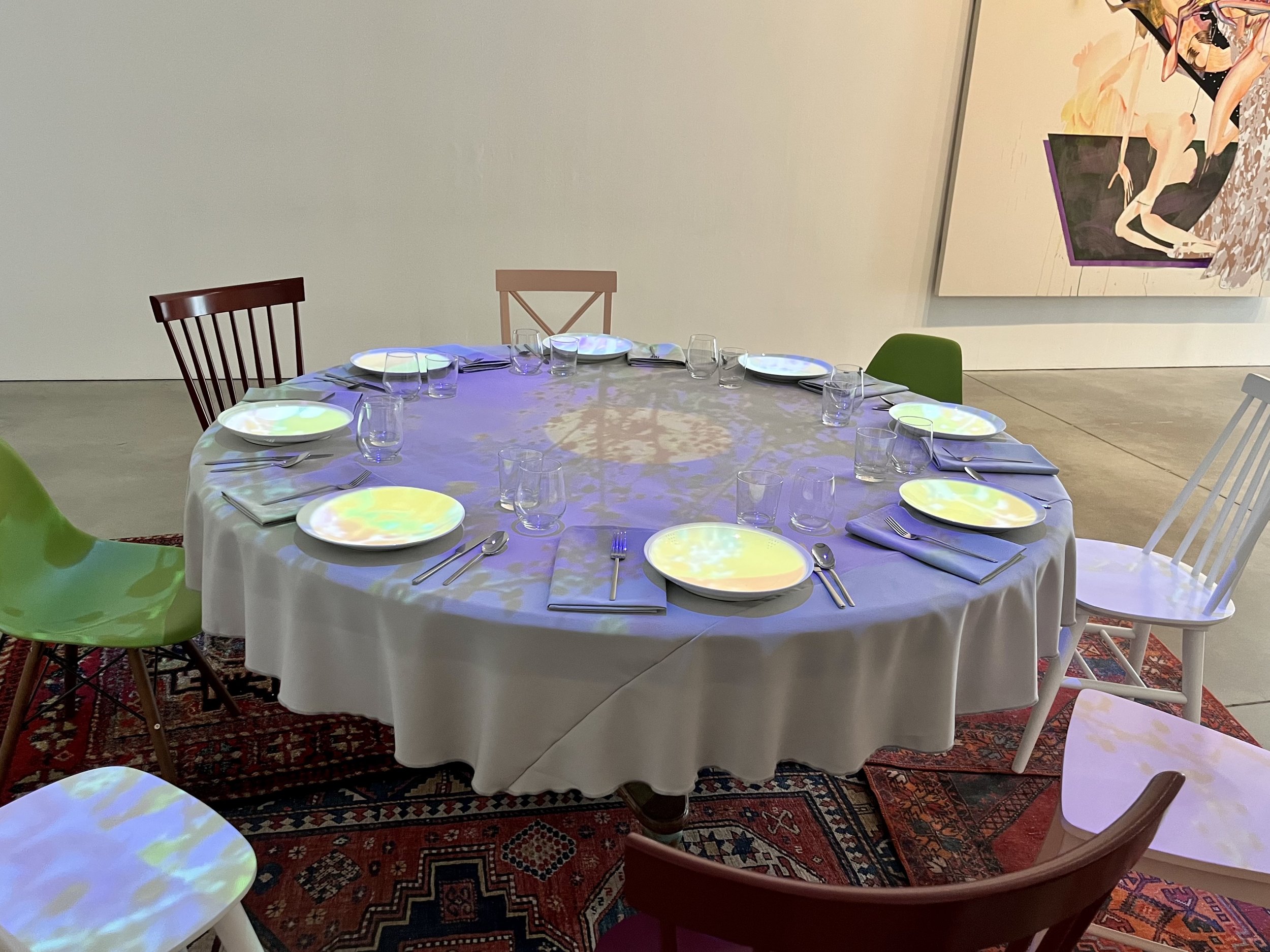
Idea: Seeing art projected on the dining table makes me wonder if we can explore showcasing artwork in a restaurant more and incorporate dishes as a component of the art installation. Visitors can also co-create with the projected art with food on their plates.

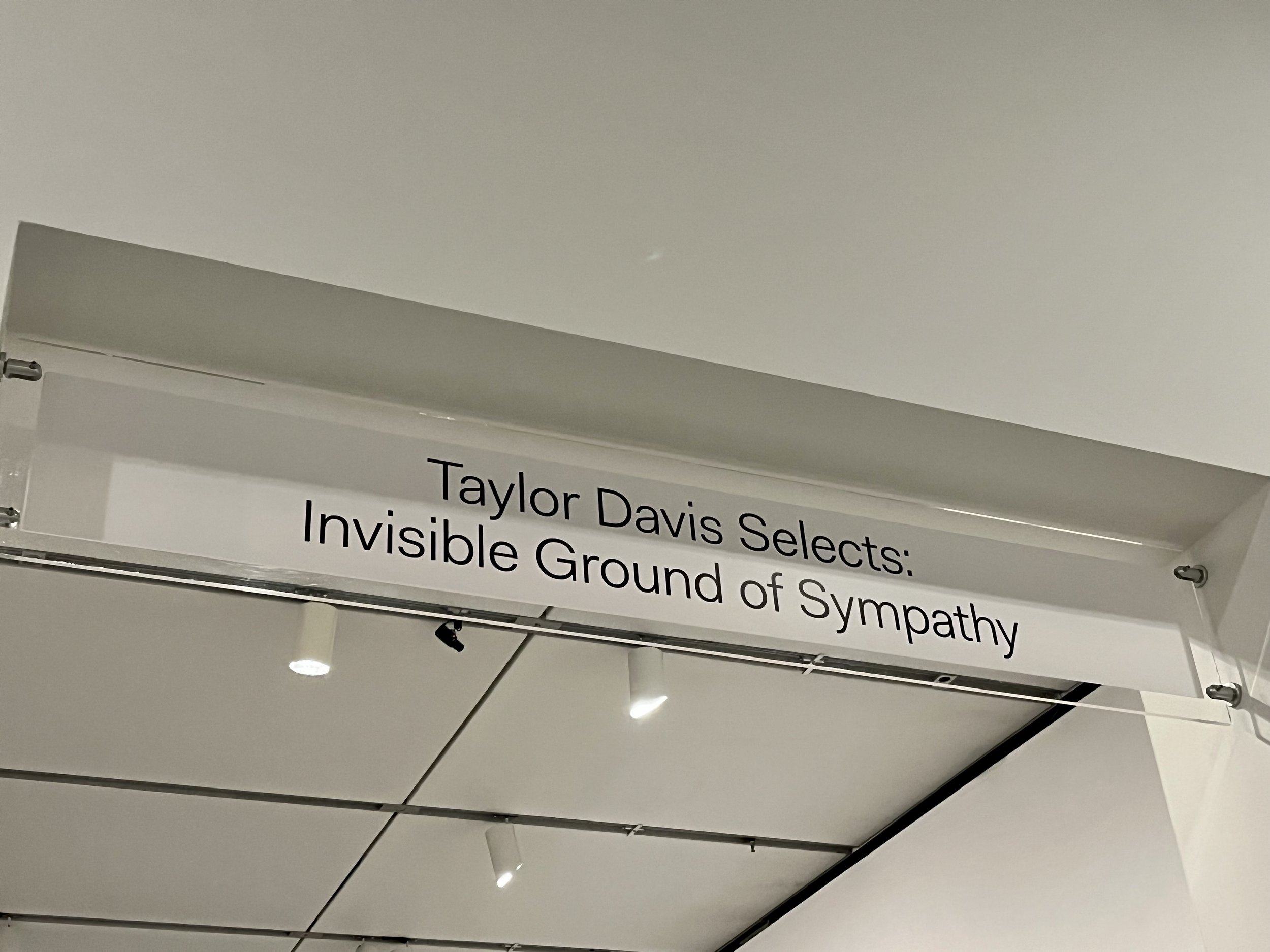
Noted the header “Invisible Ground of Sympathy” because I was thinking about sympathy vs. empathy in the context of practicing stoicism earlier this year.

This work made me appreciate the method of collaging Japanese paper with watercolor paint because it nicely conveyed the glassy, reflective medium of the window and the floor.

Besides the exhibitions, the real highlight was about the modern architecture, the seaport view, and the many interactive installations and workshops in the museum.

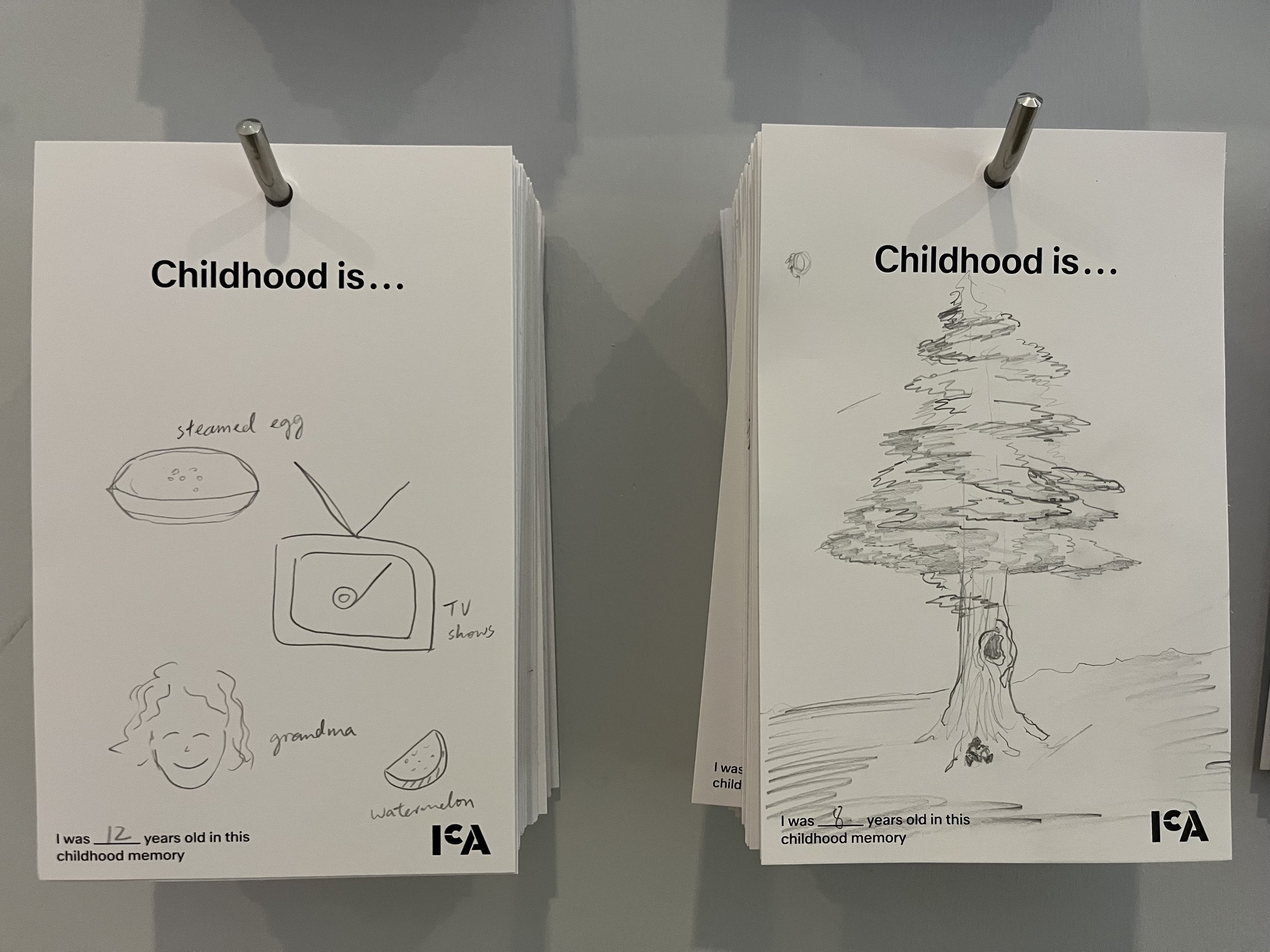
I drew the card on the left: My childhood summer is all about hanging out with grandma, watching TV shows, carving out a huge chunk of watermelon with sister, and delicious steamed egg with rice for dinner in Zhongshan, China.

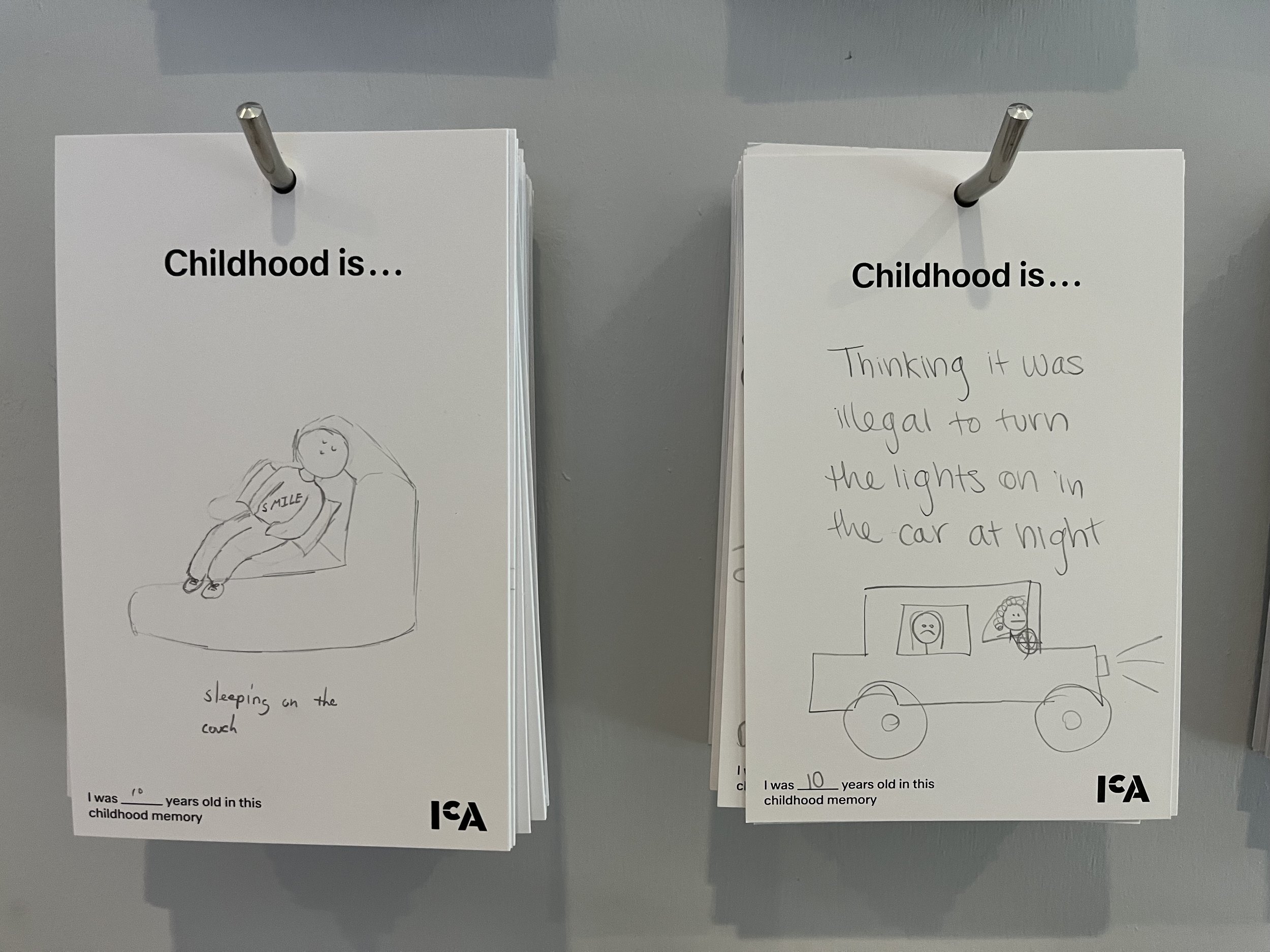
Here are a few adorable ones drew by others as part of the “Childhood is …” workshop.

Harvard Art Museums, Cambridge

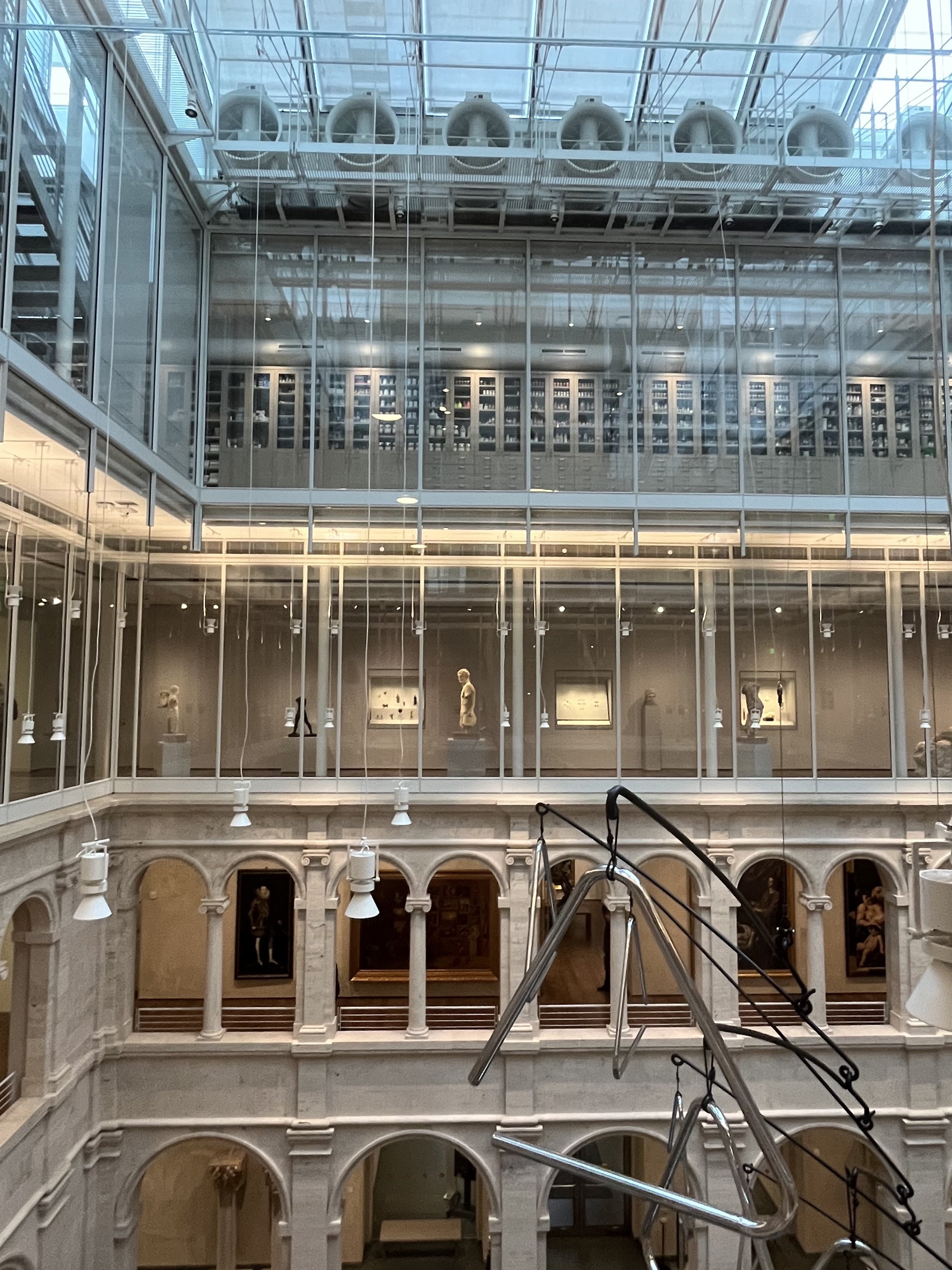
It was raining lightly when I arrived at the Harvard Art Museums near Harvard Square. The gloomy weather made the courtyard and ceiling lighting somewhat mesmerizing, especially when viewed from the upper floors. Many thanks to Boge for showing me around!

This view of the museum was so mesmerizing, with the perfect lighting from a rainy day.

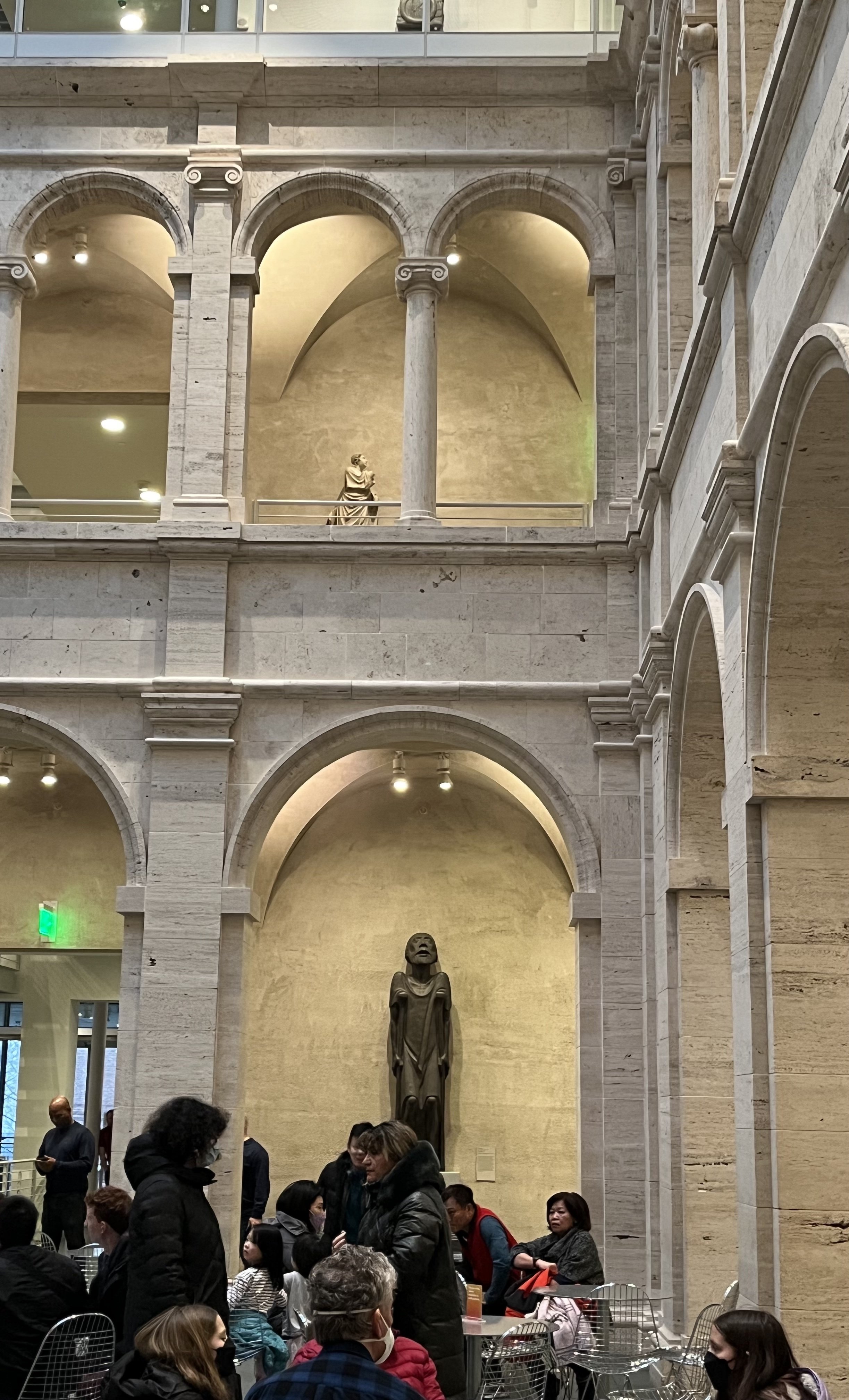
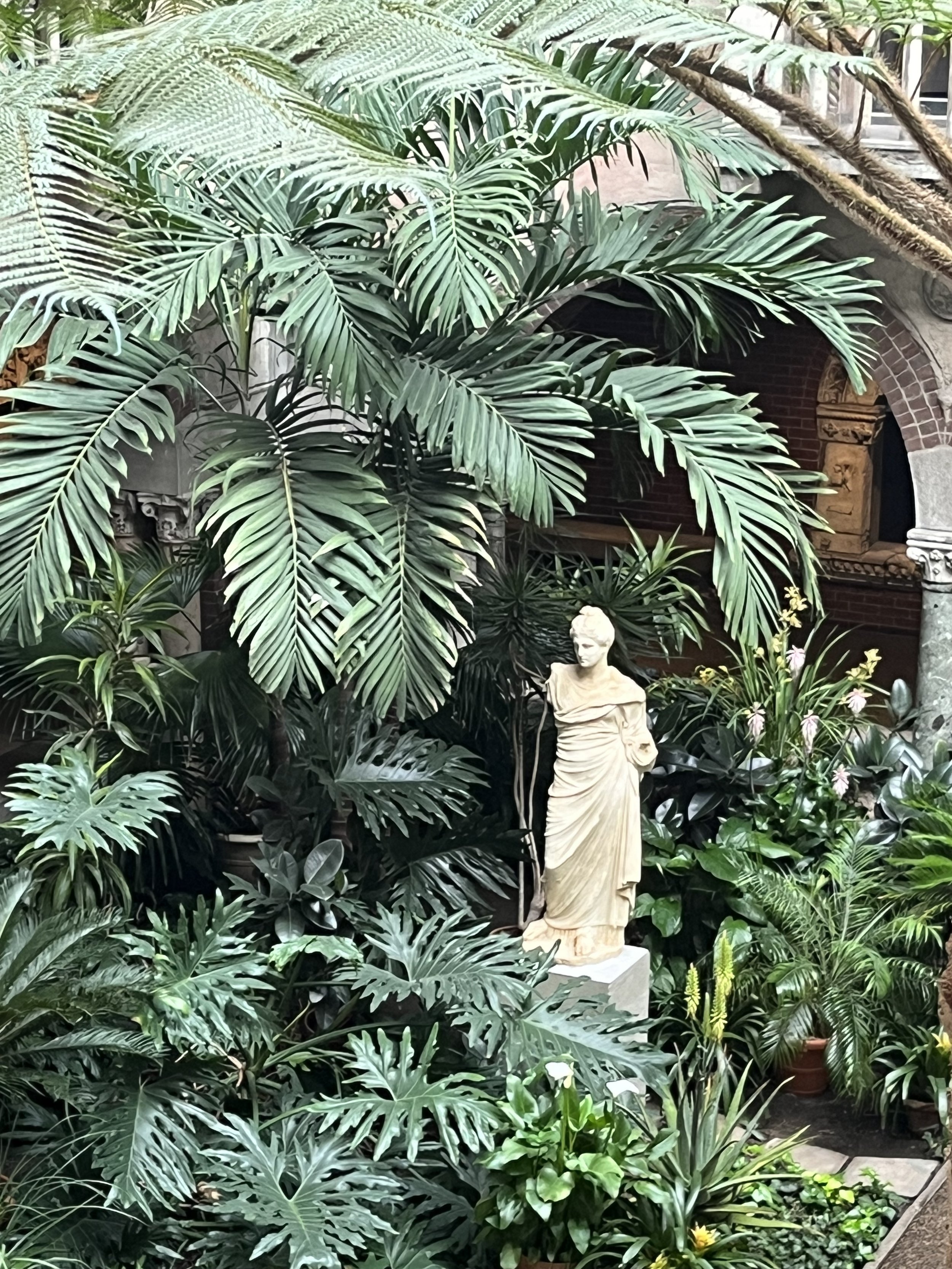
The statue is the real protagonist in the courtyard.

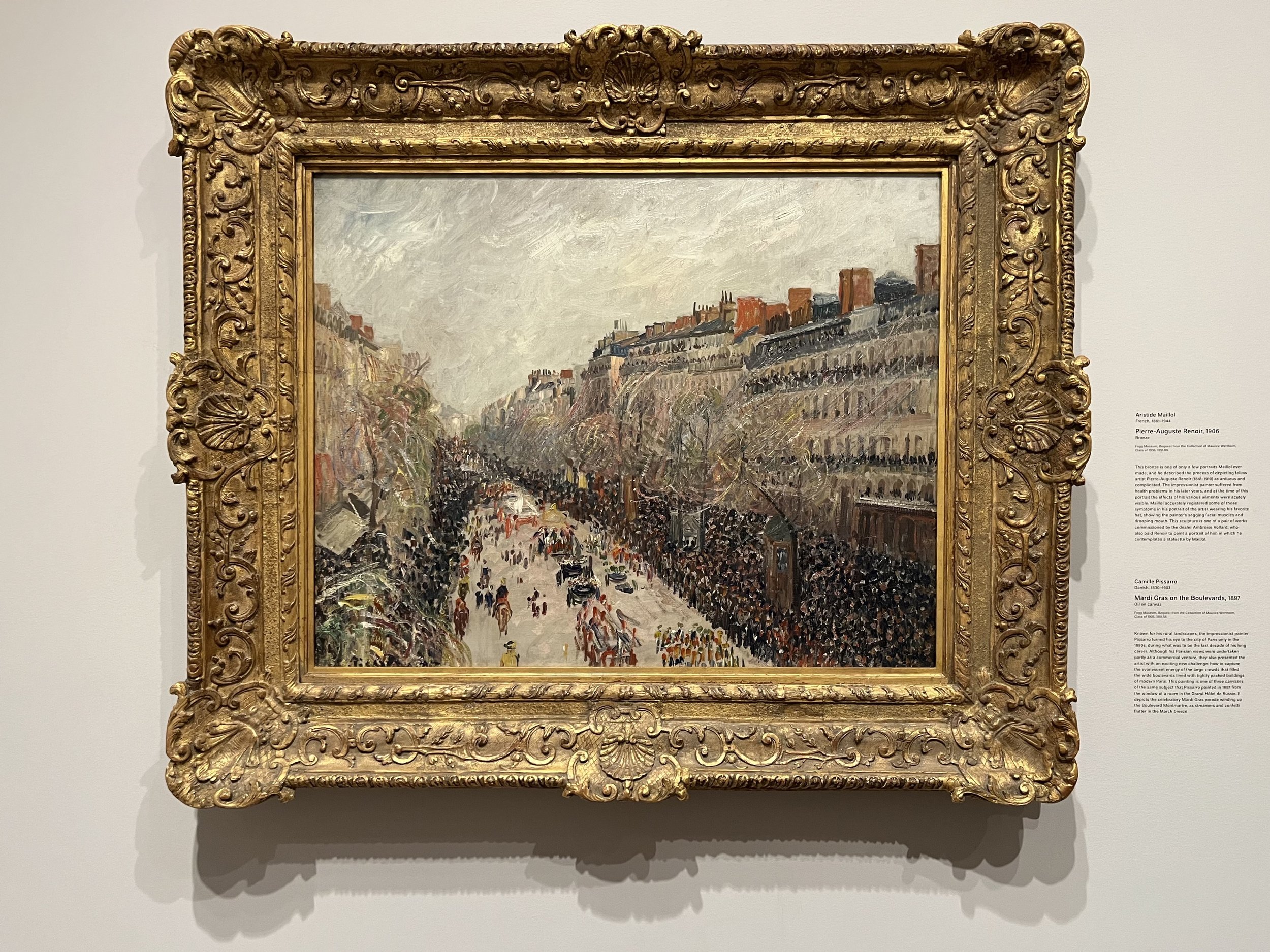
Mardi Gras on the Boulevards, 1897, by Camille Pissarro (Danish, 1830-1903). Oil on canvas. An impressionist read of Paris in the 1890s, capturing the evanescent energy of the large crowds on the boulevard.

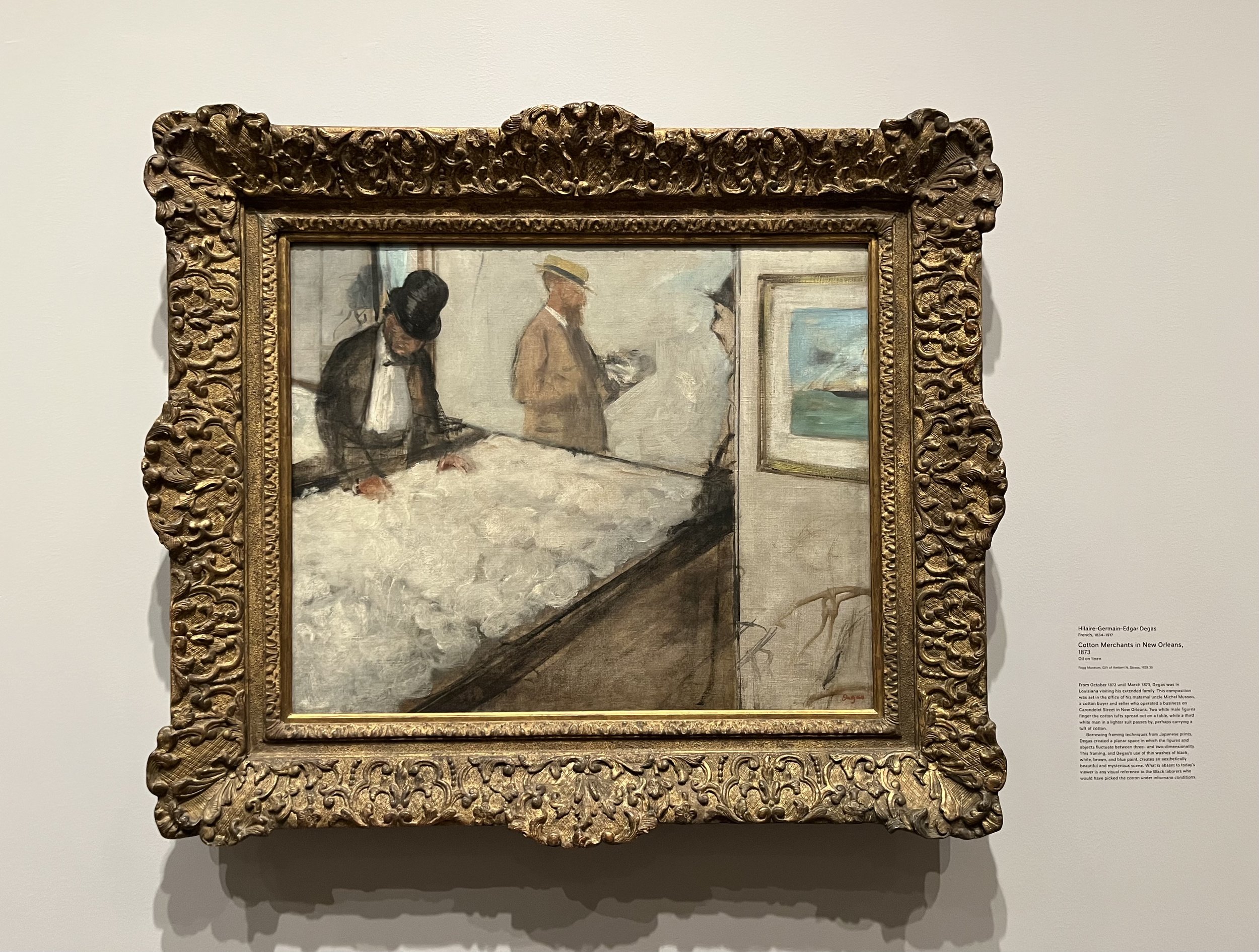
Cotton Merchants in New Orleans, 1873, by Hilaire-Germaine-Edgar Degas (French, 1834-1917). Oil on linen. This painting caught my attention because the man appeared to be arranging fluffy clouds on a table.

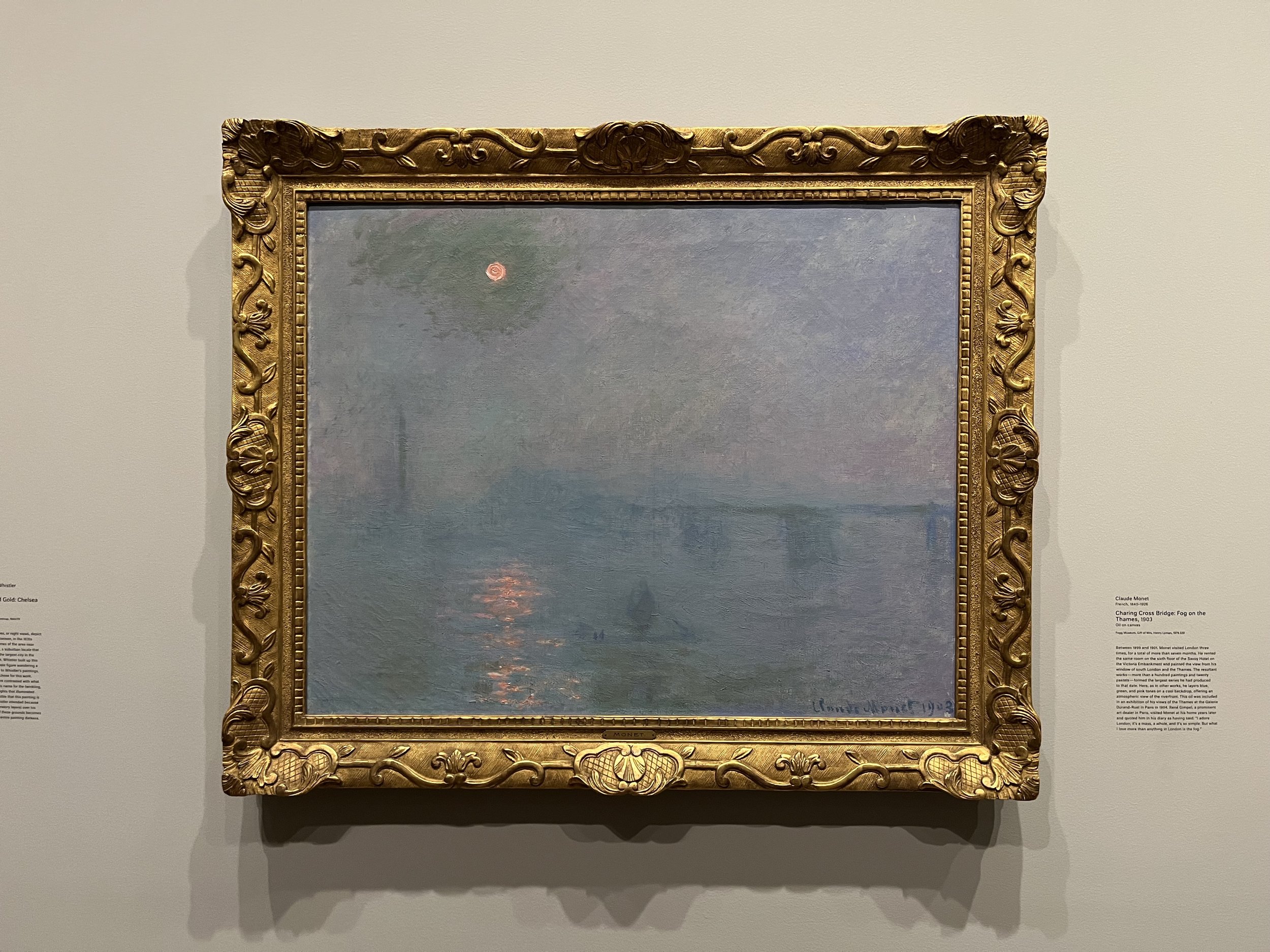
Charing Cross Bridge: Fog in the Thames, 1903, by Claude Monet (French, 1840-1926). London in the fog.

Isabella Stewart Gardener Museum, Boston

My first impression of the Isabella Stewart Gardener Museum was its elegance and liveliness. The courtyard gave the museum a vibrant ambiance, which was balanced by the classic cloisters and galleries surrounding it. Isabella’s personal motto “C’est mon Plaisir” or “It’s my Pleasure” echoed on my mind throughout my visit. I could imagine the joy she felt while designing this masterpiece, in the hope of celebrating art with the city. This is a powerful reminder that sharing pure joy and beauty is always a great reason to create. As my friends mentioned, visiting the Gardener Museum is all about experiencing good vibes and enjoying the atmospheric views.

Thank you Boston for the vibrant art scenes and inspirations. Till next time!

MIT generative AI summit 2023

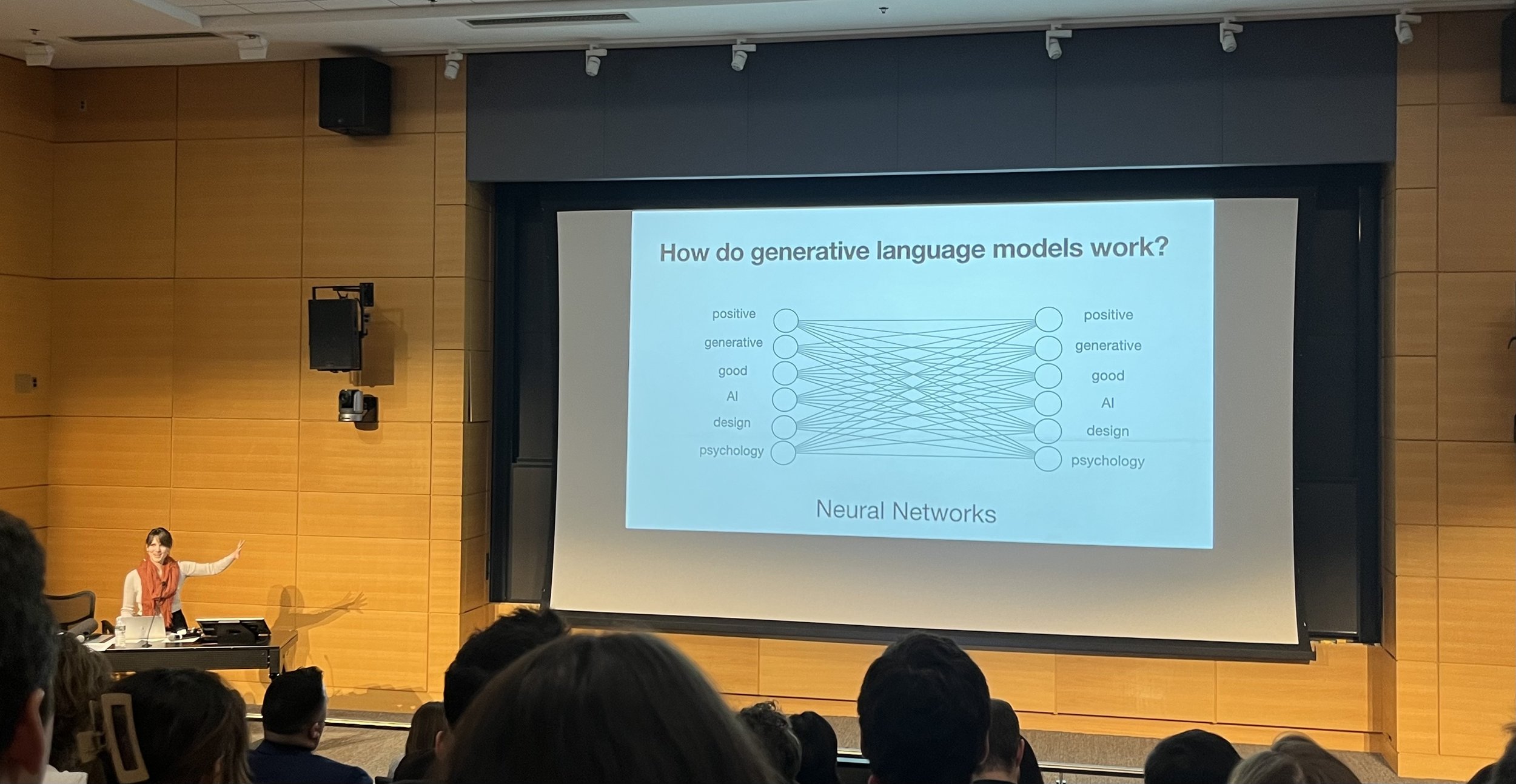
Sharing my conference notes and thoughts from a UX and behavioral science perspective after attending the inaugural Generative AI Summit at MIT on March 3, 2023. If you’re exploring similar areas or interested in collaborating on a generative AI project around tools for thought and co-creation, let’s connect.

1. Explainability and Trust

The explainability of an AI system is inherently tied to user trust. To calibrate trust, users must set proper expectations and understand what the AI system can and cannot do, as outlined in the People + AI Guidebook. People learn faster when they can see the system's response to their actions right away. Therefore, it's important to help people understand the cause-and-effect relationship between their actions and the system's response, which fast-tracks human reasoning and learning of the machine's "thought process." As AI increasingly helps solve important tasks in everyday life, how do we deal with the growing complexity of AI systems when we may not understand why they work so well?

In the book Sapiens: A Brief History of Humankind, Harari argues that humans' unique ability to create and spread fictions, leading to shared beliefs/religions and collective imagination, makes large-scale human cooperation possible. Ultimately, the ability to quickly establish trust with many strangers fuels human productivity, institutional stability, and industrialization. In the future, when the cost of producing seemingly correct information becomes minimal due to advances in LLMs (Large Language Models), how do we scale trust?

Ellie Pavlickm, Google Research

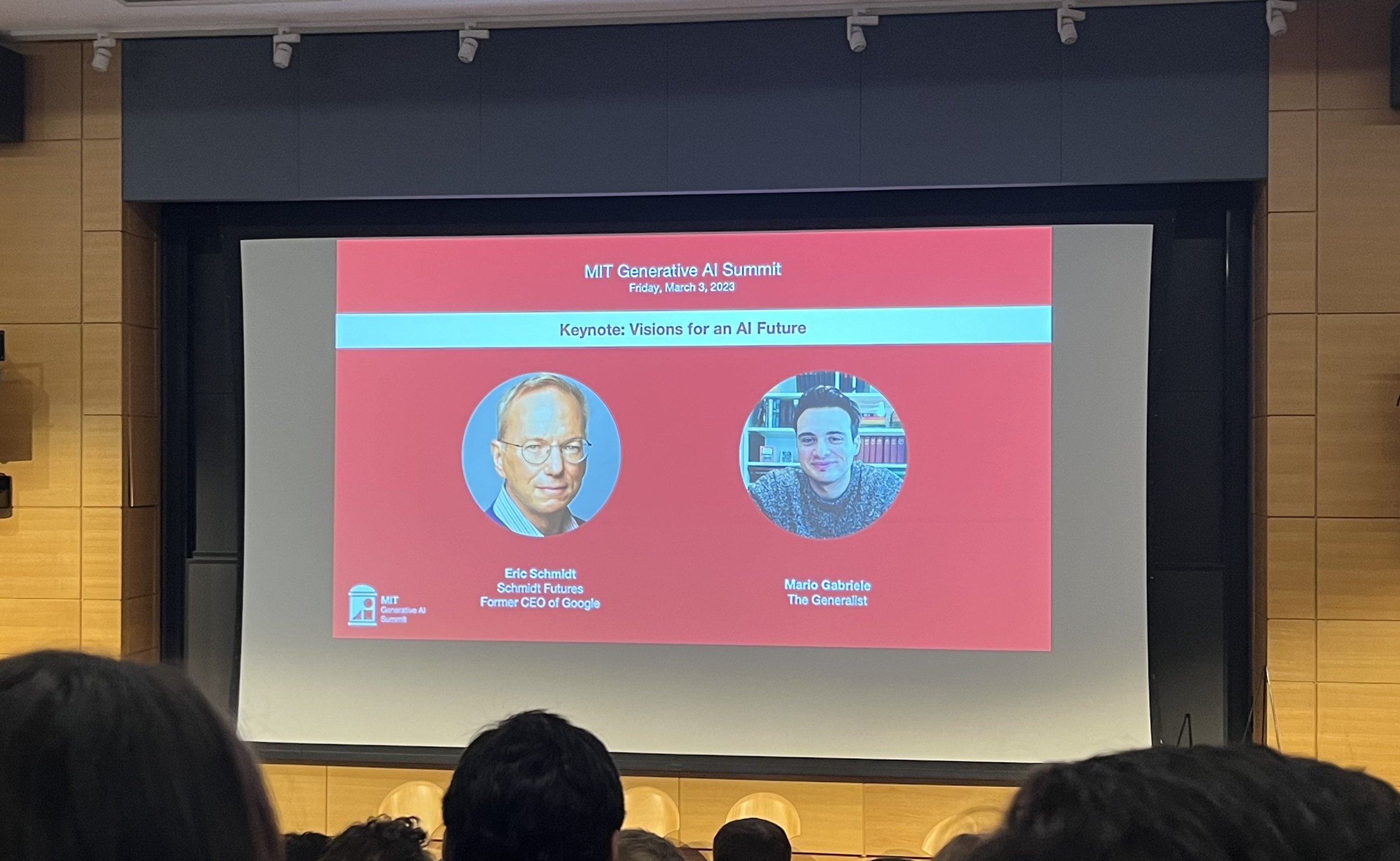
Keynote by Eric Schmidt, former CEO of Google

2. User Feedback and Control

AI systems are probabilistic, which means they can give an incorrect or unexpected output at times. Therefore, it's critical to develop the right mechanisms to gather user feedback and give users control. This will improve the AI model's output and ensure the user experience is personalized, valuable, and trustworthy.

When errors occur, we need to help users understand the machine errors and provide controls and alternative paths to navigate. This means new mental models will emerge for how humans interact with machines, requiring new levers and interaction patterns, as emphasized by both Linus Lee and Catherine Havasi during the summit. I am curious to explore new human-centered, participatory design research methods to better understand the future relationship between human input and machine output.

Today, a significant portion of UX research and behavioral science involves studying, modeling, and framing specific contexts of a problem space, so we can better reason which design direction or intervention might be more effective in solving user problems. As explained in the essay The Science of Context, the real skill here is “recognizing and articulating context with enough clarity that it illuminates how small changes (e.g., nudges) will affect behavior.” As we explore new levers and interaction patterns for AI product design, the application of behavioral science could play a bigger role in the product development process.

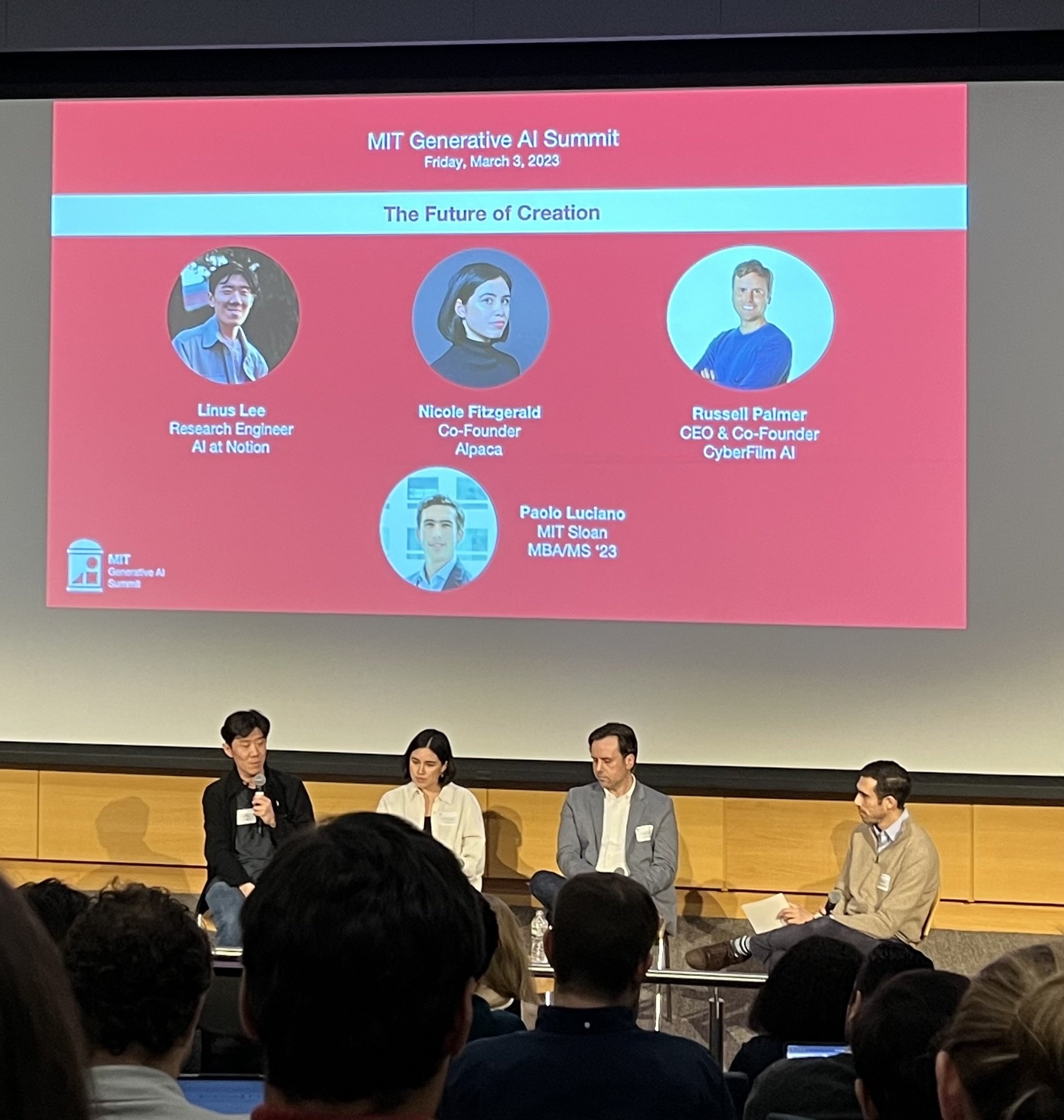
Panel: The Future of Creation (Linus Lee, Nicole Fitzgerald, and Russell Palmer)

3. Augmenting Creativity

While some may question whether human creativity will decrease with the advances in generative AI, I really like how Linus Lee raised the question of whether humanities have been getting better at making music over the past few centuries. Since the key to expanding creative expression is having an augmented ability to say the things we want to say, I see generative AI as a new tool and lens that can introduce inspiring perspectives during the creation process, much like how cameras facilitated new multi-modal art forms (e.g. films and photographs) over the past few decades.

In a previous discussion on creativity that I helped moderate with a group of friends last summer, one key aspect that emerged was the importance of cross-pollination of ideas, which can be facilitated by LLMs through the introduction of serendipity and randomness early in the creation process. In other words, LLMs can help humans quickly explore the unknown. We know that creativity can be fostered conscious actions, which is at the core of human-centered design, emphasizing the process of divergent and convergent thinking. In the future, the creative process may place greater emphasis on elements of chance, selection, and iteration, and augment human decision-making at each step of the human-machine feedback loop.

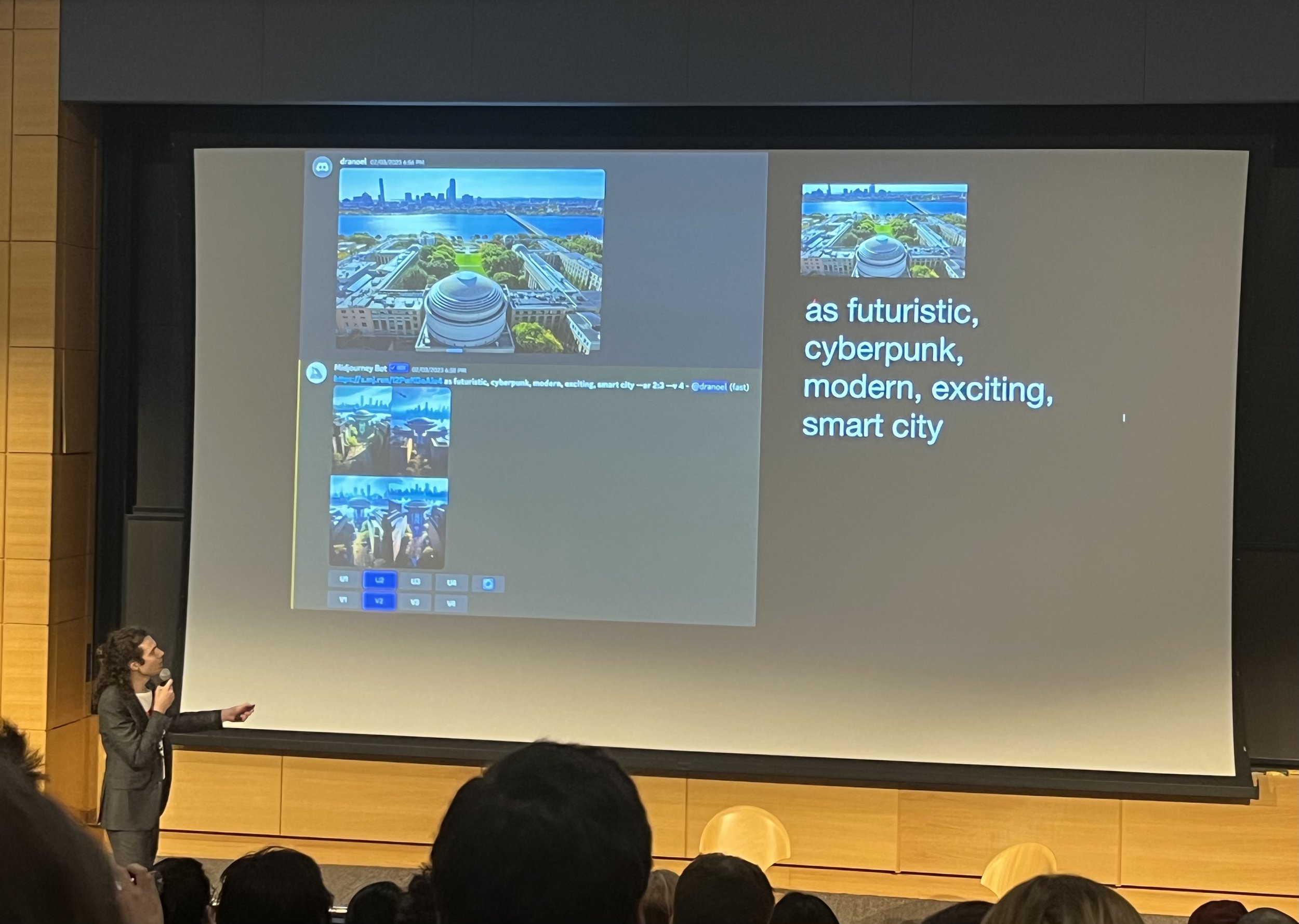
To effectively interact with generative AI models, it is critical to also augment our ability to accurately communicate what we want and develop clarity of thought, so we can be more capable in the co-creation process of prompt engineering. For example, how might we better describe voice and texture? People need to get better at communicating exactly what they want, whether it is a high-level concept or the specific way we want audio or images to be produced when interacting with LLMs.

4. Emergent Value Systems

With generative AI models now capable of quickly producing vast amounts of open-ended, creative, and multi-modal content, our tastes, values, and evaluation criteria as a society will also evolve. As emphasized by Nicole Fitzgerald during the summit, the ability to curate and fine-tune this content with taste will become critical. We can already see the education industry's evaluation system as one of the first to respond to this impact.

I'm optimistic that social curation and co-creation with collaborators, including both humans and machines, will play a big role in future information discovery processes. Content curation from trusted networks will be key in helping people discover, filter, and digest useful information.

During his keynote speech, Eric Schmidt emphasized the need for new thinkers and interpreters with multidisciplinary backgrounds in both science and art (e.g. math and philosophy) to help people understand the implications of the new AI-powered reality for society. I strongly believe in the value of multidisciplinary conversations, and this reminds me of Robert Pirsig's argument in his book Zen and the Art of Motorcycle Maintenance. Pirsig distinguishes between two kinds of understanding of the world: classical and romantic. Classical understanding sees the world primarily in terms of the underlying form itself, with the goal of making the unknown known and bringing order out of chaos. Romantic understanding, on the other hand, sees the world in terms of immediate appearance, and is primarily inspirational, imaginative, creative, and intuitive.

Currently, there is a lack of reconciliation between classical and romantic understanding. In the case of motorcycle maintenance, for example, although motorcycle riding is romantic, motorcycle maintenance is purely classical. The problem is that people tend to think and feel exclusively in one mode or the other, which can lead to misunderstandings and underestimations of what the other mode is all about. The real reunification of art and technology is long overdue.

Léonard Boussioux, MIT Operations Research PhD

Thanks for reading! If you have any comments or feedback on this blog post or are interested in collaborating on a generative AI project, I would love to connect. Please feel free to email me.

Practicing modern stoicism (part 1)

Image generated from DALL·E 2 with the prompt “modern stoics”

One of my New Year's resolutions is to be more focused and disciplined. To help achieve this, a friend and I decided to read A Handbook for New Stoics by Massimo Pigliucci together this year. The book offers 52 weekly exercises that teach us how to train our minds with Stoic practice.

Stoicism is a Greco-Roman philosophy that began around 300BCE with Zeno of Citium. Stoic ideas influenced thinkers throughout the Western history (e.g. Descartes) and inspired an effective psychotherapy called Cognitive Behavioral Therapy (CBT) in the 1950s.

The Stoics believe the best way to live our life is to “live according to nature.” To decide how to live meaningfully (ethics), one has to understand how the world works (physics), and reason appropriately about it (logic). This leads us to the idea of living according to nature—using reasoning-based problem solving to improve social living, as we are social creatures who are deeply interdependent with other people.

To do so, the Stoics, and Epictetus in particular, translate this into living by practicing three disciplines: desire, action, and assent. The Discipline of Desire teaches us what to want (or to avoid), while the Discipline of Action shows us how to act in social situations. The Discipline of Assent helps us make correct judgments about the obstacles that arise in life.

The central concept of Stoicism is the “dichotomy of control,” arguing we should focus our energy on affecting what we can control while regarding everything else as indifferent. This practice is the path toward ataraxia, the Greek word meaning serenity. By training ourselves to only want what is completely in our control, which is the promise of the Discipline of Desire, we become serene.

According to Epictetus, “thought, impulse, and the will to get (and to avoid)” are ultimately under our control. Accounting advances in cognitive sciences, modern Stoics define them as follow:

  • Thought is the judgment that things are inherently good or bad; can be implicit or explicit

  • Impulse is the urge to act based on value judgments

  • Will to get and will to avoid is deciding if it is worth spending the energy, time, and money

Although these three things are in our control, which we can make a conscious decision of, they’re sometimes influenced by external factors (e.g. other people’s opinion) and internal factors (e.g. physical sensations and cravings). Epictetus concludes that everything which is not in our own doing are not under our control (e.g. the body, property, reputation).

Image generated from DALL·E 2 with the prompt “modern stoics”

1. Focus on what’s completely in your control

Counterintuitively, aversion can be seen as a type of desire: the desire to avoid misfortune. The important idea here is to redirect our aversion away from things that we dislike but are not in our power, and to transfer it to things that we can completely control.

2. Take an outside view

The Stoics suggest that we should cultivate sympathy more than empathy. Sympathy is a feeling of sincere concern for someone who is experiencing something difficult or painful, while empathy is actively sharing another’s experiences on an emotional level to the extent possible.

This is initially counterintuitive to me, especially as a UX researcher, because our job is to empathize with users and design studies to enable others to fully understand, mirror, and share another person's expressions, needs, and motivations to the extent possible, so we can create products and services that are driven by real user needs.

The Stoics, along with modern psychology and philosophy, further explain that empathy tends to be disproportionate to the situation (i.e. we feel more empathy for people we know or see directly), and does not scale up (i.e. it is impossible to feel empathy for anonymous thousands of people, regardless of how deserving they are).

Whereas sympathy is informed by reason and is therefore more wide ranging. We can sympathize with people we don’t know or whose specific situation we have never experienced, because we’re able to recognize that similar situations would be distressing for us, and that it would be unjust both for us and for anyone else to have to suffer through them.

It’s similar to taking a third-person view of the things we go through personally. This allows us to develop a more balanced and reasonable judgment, as if these events do not touch us directly. This approach also aligns with the method of practicing more self-sympathy when facing hardship, which is common in psychotherapy.

And here comes one of my favorite exercises: write about a problem or worry and offer yourself some advice from the outside perspective each night for a week. For example, instead of writing “I feel nervous about …” start by writing “You feel nervous about …” Self-empathy may lead to magnifying internal turmoil, whereas self-sympathy helps us take a step back to take the emotion out of frustrated situations, so we can see things in an objective and clearer way.

Generated from DALL·E 2 with the prompt “statue of stoics pondering with a blue sky”

Stay tuned for Part 2 of the Practicing Modern Stoicism series to learn more about my journey.

夏威夷大岛

2022年末圣诞假期临时起意去夏威夷大岛,出发前决定这次旅行要做到随遇而安,哪怕多花了钱和时间,走了弯路,都没关系,要内心不带任何抗拒地接纳这次旅途中发生的一切。

1. “Lush and green”

抵达 Hilo 当天,在镇上吃完午饭后就沿着海岸线一路开车北上,去 Tropical Bioreserve 看热带雨林和植物花草。走在林子里,目光所及之处都是翠绿色,竹林和棕榈树高耸入云,耳畔是此起彼伏的树蛙声。园子里大多是一家人出来观光,只有我一个人悠闲地四处走走停停。

大自然确实是最奇妙的造物主,人类对颜色的认知会因为各地的气候和地理环境的差异被完全颠覆,在园子里看到了最奇异的颜色组合和纹理图案,还有粉色的菠萝和从未见过的珍稀热带兰花品种。一路看着这里的奇珍异宝,帮身边的游客照全家福,一边听着婉莹和任宁枪枪合作的新播客《别来年鉴》的第1期,觉得这次旅程与播客中讲到他们希望在2023年回归乡野,体验古朴生活的愿望不谋而合。最喜欢房东的描述,行走在夏威夷雨林时满眼都是 “lush and green,” 处处散发着富饶的生命力。

Hawai‘i Tropical Bioreserve & Garden

2. 大岛房东和邻里社区

Airbnb 房东是一位来自 Colorado 的打击乐手,年轻时曾在世界各地巡演,出过几张专辑,还可以在音乐平台上搜到他的作品,现在主要和女友一起经营 yoga studio,每年也在印度和东南亚组织 wellness retreat。房东的女友来自巴西,是一位资深的瑜伽老师,以前在纽约教了二十多年瑜伽,也是 studio 的主理人。正巧我在的那几天房东弟弟也从洛杉矶来小住,是位纪录片制片人,幽默又毒舌,感兴趣灵性禅修和区块链(果然是加州和夏威夷的完美结合)。

住在他们家很像回到了高中住的寄宿家庭,出门前被推荐好吃好玩的地方,晚上到家和他们分享见闻,睡前会互相说晚安之后再熄灯,确实被好好照顾了。我抵达的那天晚上正好是他们圣诞节后七天果蔬排毒的第一天,所以他们三个人晚上只能默默喝果蔬汁,饿了就泯一小口解解馋。房东弟弟每天晚上都可怜巴巴地坐在旁边看我吃晚饭,我一回到家就被要求分享今天吃了什么好东西,房东夫妇则坐在离我最远的沙发上。

房东家的 studio 会隔天提供瑜伽课,大多是附近的居民来上课,大家也都互相认识,顺便聊天喝茶。我天天跟着他们做瑜伽,也顺道认识了一些常来拜访的邻居。和一位当地的医生聊到他搬来夏威夷的契机时,发现很多附近的居民都在美国内陆小有成就,但厌倦了拥挤的城市生活,想要回归自然,尝试自给自足和更健康的生活方式,因此决定搬来大岛定居,是一群真正把身心灵健康放在最高优先级(且不太需要担心钱)的人。邻里间经常办 party,每个月都会聚集到一个人家里跳夏威夷舞社交,大概是人民公园里广场舞的热烈氛围吧。

Airbnb living room, looking at the yoga deck

3. 森林里的野温泉

一天晚上正和妈妈打着电话,房东忽然邀请我跟他们一起去附近泡温泉,我便兴致勃勃地坐上他们的皮卡出发了。一路上听房东介绍他的新曲子,不一会儿就开了45分钟,到达大岛东岸的 Pohoki Bay and Hot Spring。虽然出发前听说了是野温泉,但没想到这么野,路上一片漆黑,没有任何灯,只有头顶上微弱的月光,甚至开车走的路都不在地图上。我们一行人摸着石头,拿手机的闪光灯照着路走到了湖边。到了温泉边发现黑暗中竟然有不少人,岸边有一个女生在唱歌,嗓音很低。水是黑色的,光线很暗,正巧云遮住了月亮。脑中不断想起《哈姆雷特》里 Ophelia 在河边唱歌的那一幕。我指着云说月亮不见了,房东一家人笑着说别担心,月亮还在。

伸出手探了探水温,确实是热的温泉。温泉有里外两个池子,穿过一片树林就能到里面的池子,水温更热,像是被森林环抱着的隐秘小湖。有两个当地的男孩子在里面聊心事,声音很响亮,两个人说话的气势像是十个人在说。我和房东一家人也聊起天来,和这些平日里素不相识的人聊各自的生活和困惑,一起安静地感受黑暗中泉水的温度,应该会永远记得这个临时起意去探索和感受自然的奇妙夜晚。

Pohoki Bay and Hot Spring during daylight

Ophelia, oil painting by John Everett Millais

4. 火山熔岩

前一晚泡完野温泉后,第二天决定白天再去一次,想再亲眼看看昨晚那片奇妙的温泉。沿着大岛东岸一直往南开,恰好路过了2018年 Puna 火山爆发时沉积的大片黑色火山岩。停下车近距离观察了很久,郁郁葱葱的热带雨林中间忽然有一长条黑色火山岩盖住了那一片的所有植被,是当时火山爆发时熔浆流入大海的路径。靠近火山岩的树木毫无生机,还有烧焦的痕迹。公路走着走着发现前面没了路,因为被像小山一样高的火山岩石堆挡住了,再也没有被修复。后来和上瑜伽课认识的医生聊到这个景象,他说当时有位朋友的房子就在这附近,差一点就丢了性命。夏威夷岛民好像都习惯了和自然摧毁性的力量共存,世界的忽然坍塌也是转瞬即逝的事情。与自然的未知和风险离得越近,越明白世事无常,也正因为这样,能感受到岛民们的谦卑,更乐于活在当下,懂得探索自然的奥妙,感恩自然的馈赠,也敬畏自然的力量。

5. Namaste 是灵魂之间的问候

房东女主人是 studio 的瑜伽老师,住在岛上的时候几乎每天都跟着她上课,清晨做力量型的训练,傍晚回来拉伸和放松。她是一个特别有灵气和亲和力的女人,说话轻柔但有力量。有时在课上听到她抛出的问题也会想很久,有一次她问 “What’s your relationship with silence?” “What’s the value of silence?” 我当时愣住了,从未认真思考过这个问题。还有一次课后我问她每次结束练习时说的 “Namaste” 是什么意思。她回答说是 “Greetings between souls.” 不仅仅是日常意义上大家互相问候,而是两个人灵魂深处的彼此问候。从那以后,每当默念这个词都会想到它寓意深远的美。

6. Aloha State 租车

出发去夏威夷两周前,我在网上找遍了各个租车平台,一辆车都不剩,只有 Turo 上一天 $350 的 Tesla。后来联系了Airbnb房东,他热心地告诉我可以去联系他两位当地的朋友试试看,“告诉TA是我让你来的”。于是我就顶着房东的大名联系了他们,最后通过房东朋友的朋友以 $250 一周的超高性价比租到了一辆 2007 的 Toyota,一开始被这个美好的价格震惊了,后来意识到是他自己的车这段时间不用,租给我,所以才能这么便宜,就像向隔壁邻居家借车一样。

这位哥们特别热情,每次回复都要加上一串跳舞小人,鲜花和海滩的 emoji。我们约定好他会把车开到停车场的一个角落,车钥匙藏在驾驶座的地毯底下,我下了飞机就去取车。一切听起来都太不靠谱,甚至在我走出Hilo机场时心里还不确定能不能开上车。整个过程沟通效率极低,但觉得很好玩,仿佛回到了小城市熟人社会的运作模式,一切都不透明,全靠人传人,碰到善良的人就给你指条路,直到碰到能帮助你的人。感觉是一个现代社交关系的隐喻,人与人的关系极其流动,全靠信任和爱支撑。

7. 在山里开环岛长途

这是我真正意义上第一次独自每天开四五个小时车的公路旅行。从东岸走横跨大岛的高速去西岸,有时就为了吃一碗 poke 和木瓜冰沙。开车的时候心情很平静,开着一辆很旧的2007年Toyota,每次踩油门和刹车方向盘都在颤抖。一路上听了很多音乐和播客,单曲循环了很多次Faye的《青鸟》和《得意忘形》的第63期。在这样的环境里,心也变得开阔,白天出发看火山,路过海滩就乘个凉吹吹风,傍晚看完日落就回家,走走停停都完全随心。晚上有时雾很浓能见度低,我就认一些车作 “大哥”,我作为小弟默默跟在他们后面,一路上也算是有惊无险,一切顺利。

8. 夜雨中的圣诞灯展

即将离开 Hilo 的那天晚上,房东夫妇特地提早回家和我道别。正聊着天,房东想起晚上在社区里有一个圣诞灯展,提议我和他们一起看完灯展再去机场。出发前,房东绘声绘色地介绍了这个一年一度的盛会,于是我和房东弟弟都特别期待。待我们开车到了灯展的地点,门口的志愿者善意提醒我们可以把车里的收音机调到 FM 106.7,可以边看灯边听音乐。

把车停好后定睛一看,发现这个灯展其实是一个做灯饰生意的邻居家把自己的房子贴满了光管和亮片,再和电台协商好在这个时段可以播圣诞音乐,来看灯展的居民就坐在车里,像看汽车电影那样,一边听电台音乐一边看眼前的这个房子变换各种颜色和图案。我和房东弟弟面面相觑,一时语塞,被这个简陋笨拙但又有些可爱的灯展弄的哭笑不得。房东弟弟皱了皱眉率先打趣说 “Well, I’m not sure what to make of it … I guess I appreciate their thoughtfulness.” 外面下起了雨,我们只能待在车里,看着眼前朦胧又发着光的房子,听着喜庆的圣诞音乐,四目相对,不约而同地被这个滑稽又淳朴的画面逗笑了。

9. 附赠:海里的自由小人

每次在沙滩附近都会看到海里长出了很多浮潜的小人,像极了新西兰画家 Joanna Ho 画里的意象。

Carlsmith Beach Park

Watercolor by Joanna Ho (helobirdie.com)

至此,我的夏威夷历险记就告一段落了。独自旅行确实会有一些不方便,很遗憾放弃了需要晚上开车上山的 Mauna Kea 天文台观星,遇到意外状况也只能硬着头皮解决,没有人可以商量或照应,但无论如何,这次旅行的总体感受还是太好了,真实地被大岛的能量滋养。下次再见啦!

The art of loving

I initially read The Art of Loving by Erich Fromm in July 2022, in the hope of reflecting and learning systematically about the theory, science, and best practices of love. The more I learn, the stronger I felt that the education of love is long overdue and missing from our conversations today. I love how Fromm explains the evolution of love as a concept in the context of our biological needs as humans and the Western capitalist society in which we live. In retrospect, many common misconceptions of love could have been avoided have I encountered this book earlier. I noted a few key themes that I deeply resonate with as I go through the book:

Fromm argues Love is Giving

1. Common misconception: Most people see the problem of love primarily as that of being loved, rather than that of loving, of one’s capacity to love. People think that to love is simple, but that to find the right object to love—or to be loved by—is difficult. Fromm argues love is the activity of giving, which lies the highest expression of vitality and productiveness.

2. In capitalist society, love becomes package and commodities of exchange, as being lovable and attractive usually means a package of qualities which are popular and sought after on the personality market for most people. Falling in love becomes a bargain; “the object should be desirable from the the standpoint of its social value, and at the same time should want me, considering my overt and hidden assets and potentialities.”

3. The education of love, and of mature, loving qualities, is missing. As in learning any other art (e.g. music, medicine, engineering), one must both learn the theory and the practice. However, “in spite of the deep-seated craving for love, almost everything else is considered to be more important than love: success, prestige, money, power—almost all our energy is used for the learning of how to achieve these aims and almost none to learn the art of loving.”

Photo by Jerry Zhang on Unsplash

How might we develop the ability to love?

4. The ability to love as an act of giving depends on the character development of the person. It assumes the person has overcome dependency, narcissistic omnipotence, the wish to exploit others, or to hoard, and has acquired faith in his own human powers, courage to rely on his powers in the attainment of his goals.

5. The ability to love requires care, respect, responsibility, and knowledge. Respect (the root of the word respicere = to look at) is the ability to see a person as he is, to be aware of his unique individuality. Respect means the concern that the other person should grow and unfold as he is. Respect, thus, implies the absence of exploitation.

6. To respect a person is not possible without knowing him; care and responsibility would be blind if they were not guided by knowledge. I personally love this somewhat brutal analogy: “the child takes something apart, breaks it up in order to know it; or it takes an animal apart; cruelly tears off the wings of a butterfly in order to know it, to force its secret. The cruelty itself is motivated by something deeper: the wish to know the secret of things and of life.”

7. Common misconception: For most people, their own person, as well as others, is soon explored and soon exhausted. It’s easy to assume we already know our partner when we become familiar with each other. But there were more depth in the experience of the other person—if one can experience the infiniteness of his personality—the other person would never be so familiar. Then the experience of overcoming the barriers and separateness might occur everyday anew.

8. In modern society, man overcomes his unconscious despair by the routine of amusement, the passive consumption of sounds and sights offered by the amusement industry; furthermore by the satisfaction of buying ever new things, and soon exchanging them for others. Automatons cannot love; they can exchange their “personality packages” and hope for a fair bargain.

9. Love is possible only if two persons communicate with each other from the center of their existence. Real conflicts between two people, those which do not serve to cover up or to project, but which are experienced on the deep level of inner reality to which they belong, are not destructive. They lead to clarification, they produce a catharsis from which both persons emerge with more knowledge and more strength. There is only one proof for the presence of love: the depth of the relationship, and the aliveness and strength in each person concerned.

10. To master any art, anyone must begin by practicing disciplines, concentration and patience throughout every phase of his life. Concentration is a necessary condition for the mastery of an art. This lack of concentration is clearly shown in our difficulty in being alone with ourselves. To be able to concentrate means to be able to be alone with oneself—and paradoxically, this ability is precisely a condition for the ability to love. To learn concentration requires avoiding, as far as possible, trivial conversation, that is, conversation which is not genuine.

11. Love also requires rational faith. Just as the purpose of education is to help the child realize their full potentialities. The opposite of education is manipulation, which is based on the absence of faith in the growth of potentialities, and on the conviction that a child will be right only if the adults put into them what is desirable and suppress what seems to be undesirable. Having faith in another person means to be certain of the reliability and unchangeability of his fundamental attitudes, of the core of his personality, of his love. To have faith requires courage, the ability to take a risk, the readiness even to accept pain and disappointment.

Ending 2021

今年花了不少时间重新思考生命中重要的事情,以及修复和重建自己的支持系统,真的非常感恩家人朋友们的爱。面对重要的决策,我的原则仍然是:对自己保持绝对诚实,要勇敢地直面自己的愿望和判断,并坦然接受它的所有后果,这样一切才会变得轻松。

不断探索打动人心的工作

  • 高水准的产品研究只有30%是定性和定量的调研分析,剩下的70%其实在于理清哪些关键的战略和方向性问题最需要被回答,什么信息点在此刻最有助于推动产品决策,该如何用数据讲一个打动人心的故事,以及如何和团队建立彼此信任的合作关系。后面的70%让我觉得这份工作像是一个充满未知的冒险,可以尽情地感受心流的时刻,像是时时刻刻在玩,永不疲倦。

  • 下半年新加入的Google电商团队更侧重于Researchers as Strategists的团队结构,也对我的角色提出了更高的要求和挑战。现在负责的产品领域和以往相比有更多的未知和可探索的空间,是一个特别需要提出好问题的problem space。希望能更加独当一面,为团队提供准确实用的用户洞察和产品战略方向的建议,以及在关键的产品决策中持续发声和推动讨论。

认识自己,保持创作

  • 2021年比以往任何时刻都更清晰地看到了自己性格的利弊,意识到几乎所有的特质都有两面性。比如自己(1)很重视通过多元的体验和交流获得做事的灵感,但也因此不够自律管理好时间和坚持重复性的训练(2)只想花时间做自己有热情和充满挑战的事,但也因此总回避面对一些不那么光鲜但也重要的事,甚至有时不懂得感恩他人在这方面所付出的努力。

  • 在中英文的互联网上有很多创作者(精神偶像)深深地影响着我的价值观。感谢他们给予的灵感和陪伴,在状态不佳的日子里听喜欢的播客和读文章真的很治愈。受他们的影响,我也坚信创作的时刻才真正认识和定义自己,要找到自己的声音。

互相滋养的爱需要认知和练习

  • 什么是真实的爱?当彼此都很清楚为什么对方是对自己而言最特别和无可替代时,才会拥有真实,忠诚和互相滋养的爱。想要做到这点就要先足够了解自己,有能力真正看见对方,能有效沟通和理解彼此,还要在对的时机相遇并懂得珍惜对方,好像确实需要相信命运。

  • 如何保持健康的亲密关系?最重要的确实就是沟通和理解。对我而言,想要练习直面(而非回避)冲突,对自己的感受保持诚实,更理解对方表达爱的方式,感受和珍惜对方带来的独特体验,以及对 trade-offs 保持信念感。

今年有很多可爱的朋友帮我慢慢找回自信和能量,很感谢他们的爱和善意。记录一段昊神的话(珍藏在小本本上了):“Annie has a curious and also an artistic mind ... brings fresh and new perspectives to our friend group and is always out there trying new things ... doesn’t want to have a boring life and is trying to make not only her life but everyone around her interesting.”

祝你2022健康,快乐。

Dec 31, 2021 at 17 Mile Drive, Monterey

The social psychology of emotion in Inside Out

I was embarrassingly tearing up in the classroom when I watched the Pixar movie Inside Out in our final lecture of Social Psychology of Emotion. As a psychology student, I can definitely appreciate the thoughtfulness behind the production of Inside Out. With the five basic emotions as the main characters, the level of scientific rigor is truly admirable. Interestingly, during the planning phase of the production, the team consulted Paul Ekman, a well-known emotion psychologist focused on facial expression, and Dacher Keltner, a psychology professor at UC Berkeley, who explores the science behind happiness, compassion, love, power, and social class. Notably, these two scholars are the foundational psychologists in developing theories on the expression of emotions.

Basic Emotions Theory by Ekman and Keltner

Paul Ekman initially proposes 6 basic emotions, which includes fear, anger, disgust, surprise, happiness, and sadness. He later developed the Basic Emotions Theory (BET), where these basic emotions have brief patterns of facial behaviour that are distinct and serve as signals of the senders’ current state, intentions, and assessment of situation. Moreover, these basic emotions also manifest some degree of cross-cultural universality and have evolutionary roots to help us with better adaptation in life.

Whereas Dacher Keltner proposes a multimodal approach to the Basic Emotions Theory (BET), where he believes emotions are about actions. The expression of emotion should manifest in multiple modalities, such as facial muscle movement, voice, bodily movements, and gesture, since emotions cannot happen in isolation.

Sadness can strengthen relationships

Joy, Fear, Anger, Disgust, and Sadness in Inside Out

Joy, Fear, Anger, Disgust, and Sadness in Inside Out

To start off with the definition of emotion: “Emotion is an inferred complex sequence of reactions to a stimulus [including] cognitive evaluations, subjective changes, autonomic and neural arousal, impulses to action, and behaviour designed to have an effect upon the stimulus that initiated the complex sequence” (Plutchik, 1982).

In the beginning of Inside Out, Sadness feels that she is not doing any good and only makes things worse in improving and regulating Riley’s emotion. From time to time, Joy tries her best to stop Sadness from touching any memory balls and thus stop “contaminating” happy memories into sad ones. However, the culminating moment (and turning point) in the film is when Joy realizes Sadness evokes reaction from the surrounding and makes other people come help Riley out of the situation.

In the scene where Riley is sad because she has lost a hockey match, her sadness actually makes her parents come out to support her. When her friends later come over to celebrate with her, she is now happy and full of joy. This is a great example of how emotion actually helps evoke a set of complex reactions that help regulate and improve the situation for Riley. From then on, Joy begins to recognize the importance of all five basic emotions instead of trying to get rid of Sadness because it seems “useless.” From a scientific perspective, Keltner proposes that sadness is actually an emotion that can strengthen relationships. Although Joy does play a major role in controlling and regulating the other four emotions, they each have their own job and functionality as a team.

A healthy psychological state is a team sport

Look Out from the “Emotion Headquarter”

Look Out from the “Emotion Headquarter”

In the emotion literature, there are two approaches to understand emotion: the categorical approach, where emotions are distinct entities as in Inside Out, and the dimensional approach, where emotions are defined based on three core dimensions (i.e. valence, activation, and arousal).

In Inside Out, the film applies the categorical approach to define emotion, but at the end of the plot where Riley plays hockey in a team, all of the emotions (i.e. Joy, Sadness, Disgust, Anger, and Fear) are activated to perform as a team at that moment. Thus, emotions actually function in a more complex way than simply having the five emotion types function separately at work. In fact, most emotions encompasses more than the dominant type and may shift as we navigate through the situation. For example, an initial sad memory may actually help evoke care from other people, thus strengthening relationships and turn the event into a happy and joyful ending. Inside Out is able to depict this complexity through careful design of the visual depiction, which is really admirable and scientifically accurate.

Visualization of human memory and personality formation

The visualization of how human memory regulate and develop is truly mind-blowing in Inside Out. Just as how the human brain works in reality, Pixar is able to narrates how our personality is supported by several core events and memories, and that each piece of memory is a “memory ball” with a more dominant emotion. I especially love the depiction of the long term memory database in the film, where there are “memory cleaners” who get rid of old and dysfunctional memory balls to maintain a healthy state of memory storage.

From a developmental perspective, the first emotion that Riley born with is happiness, but more accurately, within 30 seconds, other emotions kick in and the baby begins to cry — as part of the developmental process to grow and perceive the world based on these distinct but cooperatively emotion types.

Riley’s Imaginary Friend Bing Bong in the Long Term Memory Database

Riley’s Imaginary Friend Bing Bong in the Long Term Memory Database

Long Term Memory Database

Long Term Memory Database

Our core memory transforms and helps us grow

Moreover, as in our emotion regulation lecture, when Riley’s emotional state has a breakdown, some of the core memories and islands get destroyed. As much as we lament the disappearance of childhood fun times and our imaginary friends, it is quite true that these may all fade as we grow up and we will meet new adventures down in the journey. Some old memories must go, as we need to build resiliency through each phase of human development from a child, a teenager to a fully grown adult.

Understanding humans inside out is to build empathy

Recall Happy Memory from a “Memory Ball”

Recall Happy Memory from a “Memory Ball”

Lastly, I love the last scene where we can now take a peak in different characters’ minds inside out, from the teacher, the pizza server, the teenage boy, and even the cat on the street. Recognizing and trying to understand others’ emotional state is part of our ability to empathize with the world. When we attempt to listen, observe, and understand how others navigate the jungle through managing the five emotions in their own heads, we reach a better and more in-depth understanding of each other. The world is more interesting precisely because we have complex and functional emotions at work all the time. Thank you Inside Out for doing such a great job in bridging all this in a fun and accessible way for a broad set of audience.

Canterbury Tales and value of the ordinary

This semester, I take a year-long course on Chaucer's literature and we were assigned to read the Canterbury Tales for the spring term. We are now at the Miller's Tale from the first fragment, but I found it quite difficult to appreciate the value behind these medieval comedic stories, where its narration of the ordinary people and their lives are filled with jokes (and sadly I do not find it funny in anyways), adulteries, and superficial horseplays. The style of Medieval conversations for the lower class uses plenty of coarse and even "bawdy" language in their dialogue and storytelling.

Canterbury tales mural by Ezra Winter. North Reading Room, west wall, Library of Congress John Adams Building, Washington, D.C.

Canterbury tales mural by Ezra Winter. North Reading Room, west wall, Library of Congress John Adams Building, Washington, D.C.

During this week's office hour, I asked my professor "what’s the value of comedy, beside serving as a satire and reflecting the state of society at the time? It seems like tragedy has more 'literary value,’ because the themes in tragedy seemed more eternal in humanity research." My professor replied, "the value of comedy lies exactly in the narration of the ordinary. Comedy reflects the social convention at the time, the thoughts, the emotions, the constraints, and the dialogue of the average people … the 'invisible' population from heroic or epic stories. The experience of the ordinary people may be a 'truer' reflection of the society in the history, as opposed to the exciting and heroic stories of the knights and kings. The ordinary has its own unique value, although it is not so easy to appreciate and resonate with what they cared about at the time." I silently agreed and I thought because the value of the ordinary is often "invisible" and "not-so-exciting-to-recount", it is often undervalued and out of sight.

In our modern society, along with our limited attention and mental resources, it is the wisest to place our attention on the more "significant" things and events, rather than spending time on the relatively trivial and mundane. With this mindset, it is great that we can act more efficiently, by attending to the most important and the most "valuable" aspects of the world. But with this focused and "filtered" mindset, we are also vulnerable to overlook the value of the ordinary, the "not-so-significant" events, and the trivial every day life that occupies a huge portion of our daily experience. A hundred years from now, the part of our experience that does not fit into the category of having "historical significance" may be forgotten and become irrelevant for the future, just as how we may find it difficult to appreciate the mundane life of the average medieval people narrated by Chaucer. 

Emotion narrative in Call Me by Your Name

A film review of “Call Me by Your Name”, directed by Luca Guadagnino, 2018

On a bright summer day in northern Italy, the 17-year-old Elio puts on his sun glasses and lies on a chair in the yard with sunlight washes over him. A typical pleasant summer afternoon with cheerful music, hot air, shiny green leaves, and cool water in the pond. Orange trees have filled the garden, leaving plenty of space for shades and gentle breeze. 

Elio writes music. Delightful and simple tones are the most beloved in the film, partly because it suits the best with the relaxation (and perhaps idleness) of the day to day life in the villa. He is having the best time in his youth, enjoying the glittering days of inspiration and exploration.

Things have changed once Oliver, a charming visiting scholar, arrives to spend the summer with his family. Every eye contact, body movement, and slip of word between the two becomes hint for emotion narratives. There are different phases of emotional development between the two protagonists. Elio and Oliver first begin with careful exploration of each other, where both of them are aware of the emotional tension, but will not disclose it. The awakening desire for sensual pleasure gradually dominates Elio, where he craves deeply for Oliver, for an unexplored territory and sensation in his life. These subtle desire are narrated in a very open and unsophisticated way that guides the viewers to appreciate the authentic desire and sensibility of human experience.

1.jpg

As a viewer, the mundane day to day narration of their summer seems perfectly ordinary. But it is evident that Guadagnino embeds complex emotional tension within the simple family dialogue. By gradually unveiling the relationship of Elio and Oliver, Guadagnino in fact investigates the nature of love, emotion, and relationship, as well as their influence on human experience as a whole.

Specifically, Guadagnino conveys a stance on the significance of having courage to confront your own awakening desire in life, because there is nothing to be shameful of when you encounter your true emotion. As Mr. Perlman says to Elio, “you had a beautiful friendship...Maybe more than a friendship. And I envy you.” Encountering and embracing your true desire and emotion is a courageous thing to do, and it is incredibly beautiful too." 

In every stage of our growth, we gingerly perceive, silently observe, and sometimes reluctantly constrain our emotion toward a relationship, a desire, or an experience. Instead of snuffing the flame at the root, Mr. Perlman reminds us to all be gentle to these precious moment of emotion awakening. As Perlman points out “withdrawal can be a terrible thing when it keeps us awake at night, and watching others forget us sooner than we’d want to be forgotten is no better...to feel nothing so as not to feel anything—what a waste!” Indeed, we value emotion and regard it as a unique human experience that distinguish us from the crowd. The process of emotional exploration guides us to understand ourselves, our identity and our value. When Oliver and Elio initiate their jargon of “call me by your name” and repeatedly call each other “Elio” and “Oliver”, the intimate affection leads to something symbolic and abstract that represent their hearts.

2.jpg

Interestingly, in Chaucer’s writing, he also repeatedly mentions that “love is the greatest law above all”. However, in this film, neither the fidelity of love nor the promise of love matters that much. It is the emotion within human affection that moves us and guides the growth of the protagonists. Love can be arbitrary, demonstrated in the final phone call from Oliver, telling Elio that he will get married soon. Love hurts. But love, as well as other types of emotion, has the power to move us and reminds us of its preciousness.

Lastly, the title “call me by your name” is a hint of intimacy for those who are engaged in a deep relationship. It serves as a symbol that suggests a blurring line between “you” and “me”, which is referred by the blurring identity between the two names. Eventually, Guadagnino reminds us to never devalue the beauty of emotion, the confusing moment of ambiguity, and the precious awakening moment of desire.