A few weeks back, I gave a talk on Designing AI-Native Interfaces for Subjective Decisions at AIE Singapore. The first wave of AI worked by removing friction for utility tasks, but as AI begins to help people make subjective decisions, like what looks good on me or what kind of trip I want, frictionless flows shortcut what people came for: exploring, building taste, and discovering themselves.
In the talk, I used mostly Google product examples (Virtual Try On and Travel Explore) and the concept of friction, drawn from behavioral science. This post expands on the talk through a different lens: how Eastern ideas about action, space, and restraint describe, with unusual precision, what AI-native interfaces for subjective decisions require.
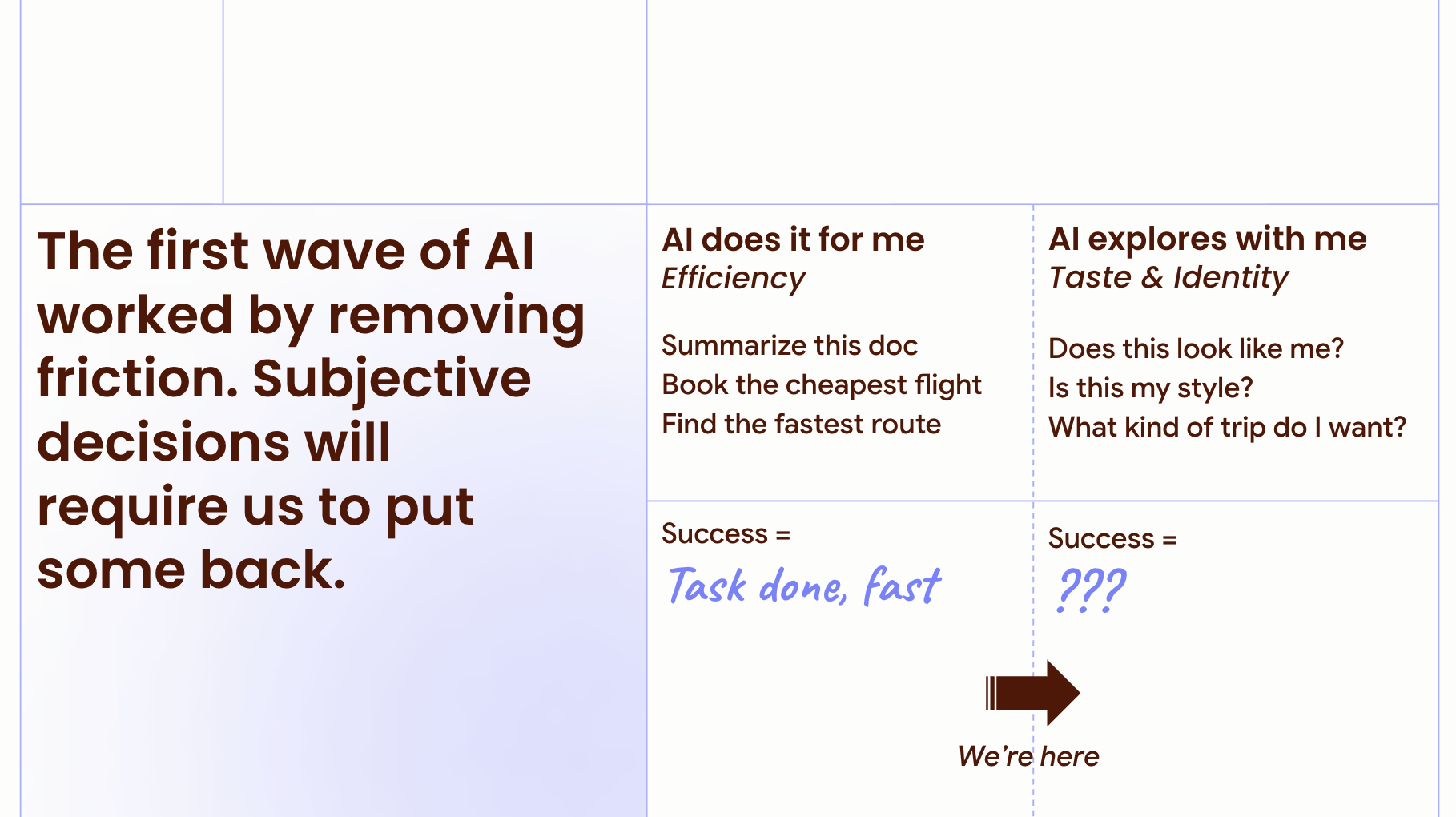
"Designing AI-native Interface for Subjective Decisions" at AI Engineer Singapore (May 16, 2026)
Wu wei: go with the grain
Wu wei(无为)comes from Laozi’s philosophy which describes working with the grain rather than forcing one’s intent. Not passivity, but creating conditions under which the right outcome can surface on its own.
It’s a useful lens to think about what not to do. In design terms, wu wei discourages systems that push against the user’s natural pace and flow. It describes the absence of manufactured push, the discipline of not filling all the space when the user hesitates and leaving them room. A genuinely wu wei product is one whose success is measured by the user reaching their own decision well, not by how quickly they’ve moved through the flow.
In e-commerce, applying wu wei means the system won’t herd you toward add-to-cart. Instead, it provides the conditions (good options, clear information, space to think) that let your own decisions emerge. When you’re forming a preference that is deeply personal with no single right answer, what you need is not more options but space to sit with the few that matter, and a system that isn’t shoving you toward one.
This is also where wu wei diverges from friction as a design concept. Friction is a speed bump that can be used to change behavior towards an outcome. Wu wei draws a more specific line: the resistance has to serve the user's own unfolding, in their natural flow and pace, not someone else's idea of a better outcome.
The winding paths vs. geometric control
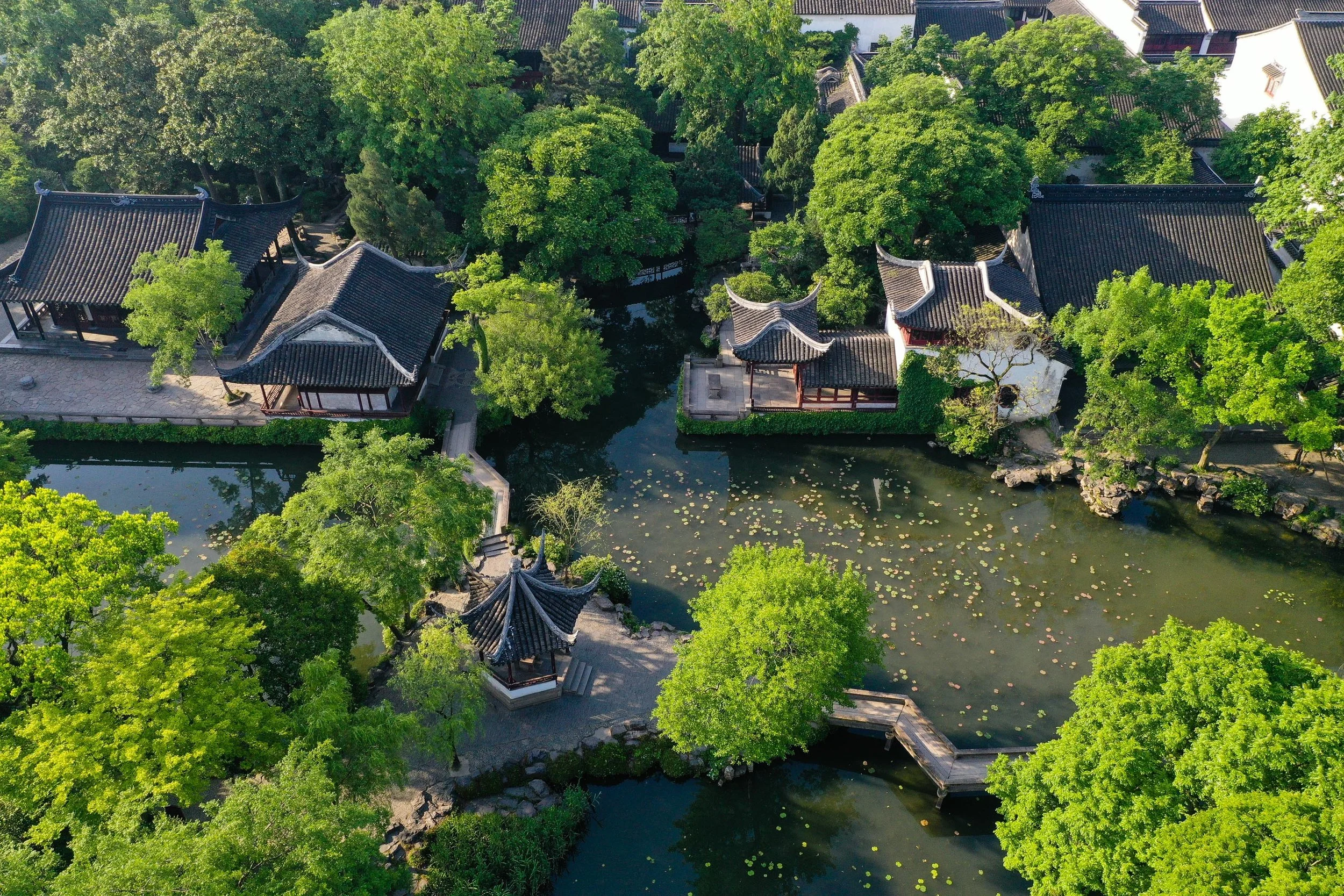
Zhuozheng Garden, Suzhou, China
Applying wu wei in design isn’t new. It has influenced Chinese landscape architecture for thousands of years. A Suzhou garden never delivers itself to you, it withholds, frames, and defers, and the experience is something you assemble by moving through it. This is what the right moments of friction in AI tools do too: they help people explore, build taste, and immerse themselves in a self-guided experience that feels personal. A few of its mechanisms:
The winding paths(曲径通幽)intentionally withhold, so you can’t see what’s behind the pavilion and you walk to find out. The walking is not wasted time, it’s the experience of exploring the garden by refusing the most efficient route.
The view changes as you move(移步换景)so you can explore a range of possible routes instead of being given a single vantage point that “best” views the garden. Two visitors walking different routes have genuinely different gardens.
Asymmetry and irregularity(自然)in how rocks, water, and plants are arranged to look unforced and natural, as if they grew that way, despite every detail being designed with enormous care.
That is precisely what designing for a subjective decision requires: don't deliver the conclusion, build the conditions under which the person reaches their own. Action does the real work of building the garden with care: the options, the comparisons, the grid of possibilities. Space gives the user room to walk the routes their own way. Restraint resists handing over the "best" view. Wu wei is not the absence of effort, it's pouring the effort into creating the conditions and none into forcing the outcome.

Gardens of Versailles, Versailles, France
Rooted in a different school of thought, the Garden of Versailles makes almost the opposite design choice. Formal French gardens strive for radial symmetry with one privileged viewpoint (the king's). The grand axis lets the whole composition be grasped at a glance, nothing withheld. Topiary forces nature into geometric shapes. Versailles is a garden of arrival without travel, the complete version handed to you from the sovereign’s vantage point. A Suzhou garden makes you arrive at it yourself, by a path of your choosing.
Some AI products should be Versailles: a tax assistant, booking flow, or enterprise dashboard may need clarity, command, and fast legibility. But subjective decisions require something closer to a Suzhou garden: partial views, movement, and self-directed discovery.
The discipline of restraint

WeChat’s Moments feed
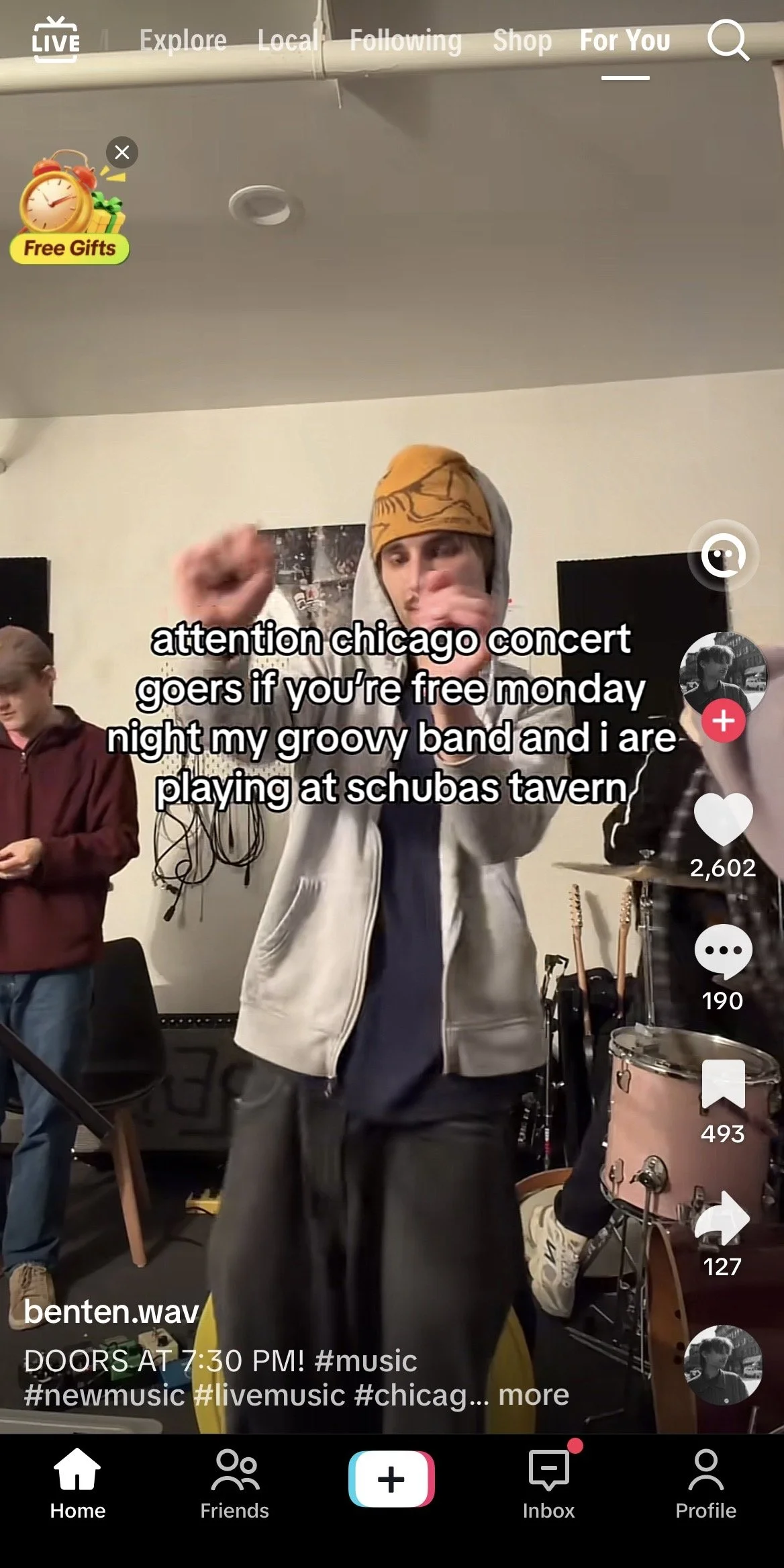
TikTok’s feed
Zhang Xiaolong’s product philosophy for WeChat is “use it and leave”(用完即走). Success is measured by a user leaving the tool satisfied, not staying. This is rare at a time when most consumer apps optimize for engagement and time-on-app. The discipline of not adding things is the hard part: deciding what to leave out, resisting feature requests, and keeping the surface quiet.
Western design has long practiced visual minimalism, but clean surfaces and behavioral restraint are different things. Minimalism is about how much you show, whereas wu wei is about whose intent the design serves. By that measure, WeChat’s restraint runs deeper than its surfaces. The Moments feed keeps generous white space and declines the feature-stuffing that maximizes engagement elsewhere, even at over a billion users. The launch screen has stayed untouched for more than a decade: no splash ads, no seasonal decorations, just a solitary human before something vast. (As a side story: the founding team chose to show the Africa slice of the earth, because that’s where human civilization originated.)
WeChat is, by most measures, one of the stickiest products ever built. Which is exactly what makes the restraint in its core surfaces interesting. It's a refusal to maximize engagement from a team that could have filled every pixel and didn't.

The launch screen of WeChat remained unchanged 2011-2026; a lone figure under the planet
Judgement at every turn
In a Suzhou garden, the restraint is architectural and the designer made the decisions about what to withhold centuries ago. In an AI product, the system has to judge, turn by turn, when to offer more and when to step back, and the conditions under which restraint is the right move change with every user and every moment.
This is what makes wu wei hard to engineer. Restraint is not a one-time stylistic decision; it's a continuous act of judgement about whether the next move is actually helpful. It takes precision about what the user actually came for, and the metacognition to notice when the system’s instinct to help is the thing getting in the way.
Many conversion-optimized apps push the other way. A product that holds back, that doesn't manufacture urgency or optimize for engagement, pays a cost under most business models, because it isn't maximizing for fast results: engagement, completion rate, time-to-value. But for subjective decisions, optimizing too early can collapse the very preference formation the product exists to support.
That means we also need a different set of metrics. Did the user make a decision they still feel good a week later? Did they feel they chose, or that they were steered? The metrics that matter are decision durability and self-attributed ownership, not speed-to-conversion. Choosing to measure those things is itself the first act of restraint, and the one the team has to want.
Field notes » May 2026
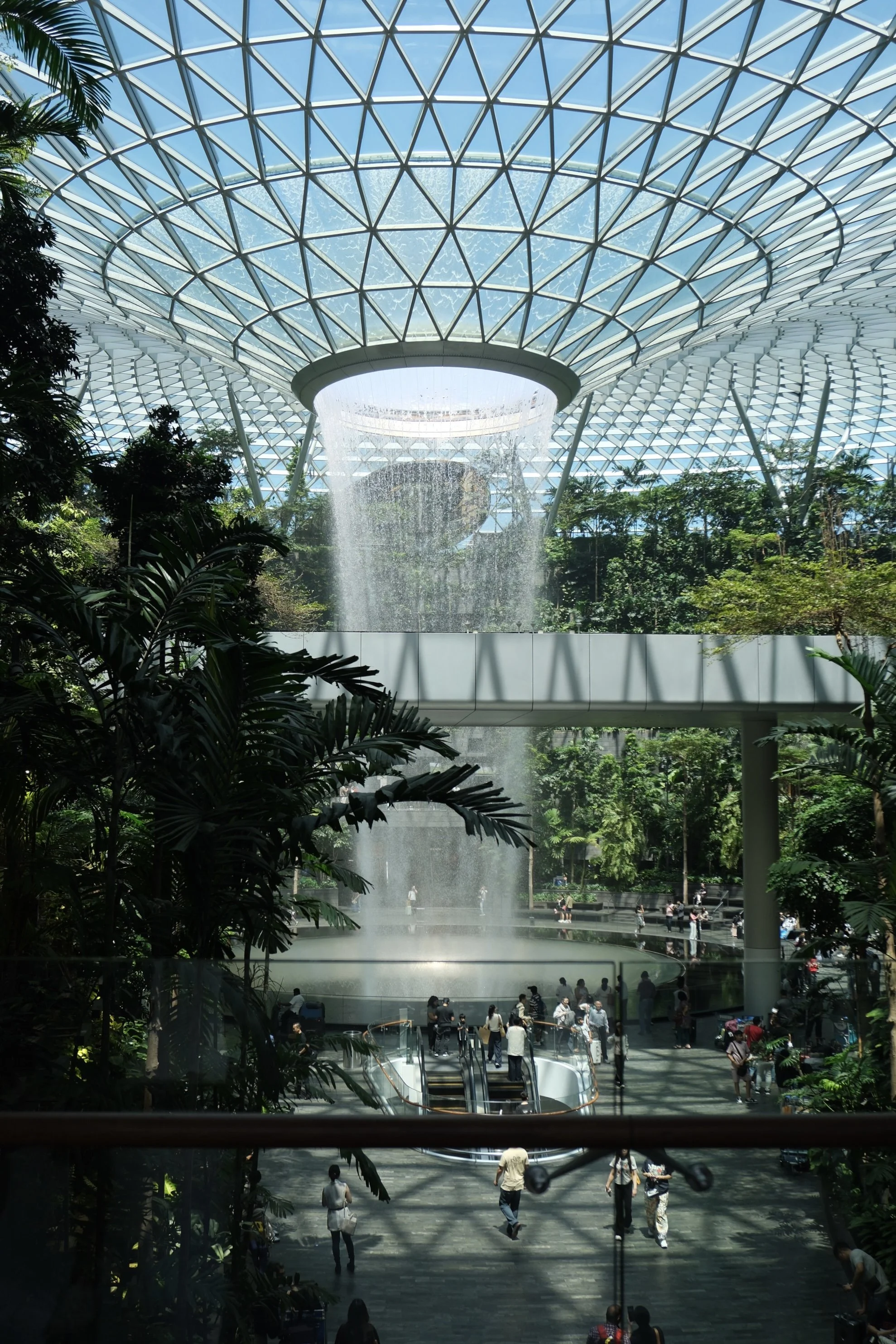
Jewel Changi Airport in Singapore

Tamarind Village in Chiang Mai
May has been lots of travel: Singapore, Chiang Mai, and Zhongshan. Singapore was a glimpse of futuristic city design with neighborhoods that are vibrant and down-to-earth. There is no English word for 烟火气, roughly the hustle and warmth of everyday life, the smoke and noise of a place actually being lived in. Something I really miss about living in Asia. Chiang Mai is quiet, celebratory, and elegant, like a warm, gentle breeze. We were lucky to catch the last day of the Inthakin Festival and that night, being in the crowds among the traditional Lanna ceremonies, flower offerings, and lively night markets, stays vivid in memory.
Thanks to Weiwei for the many conversations on Eastern philosophies and design the past few weeks, which inspired me to write this piece. Her talk on Eastern product building, cultural context, and local storytelling at AIE Singapore is amazing and you should definitely check it out!